
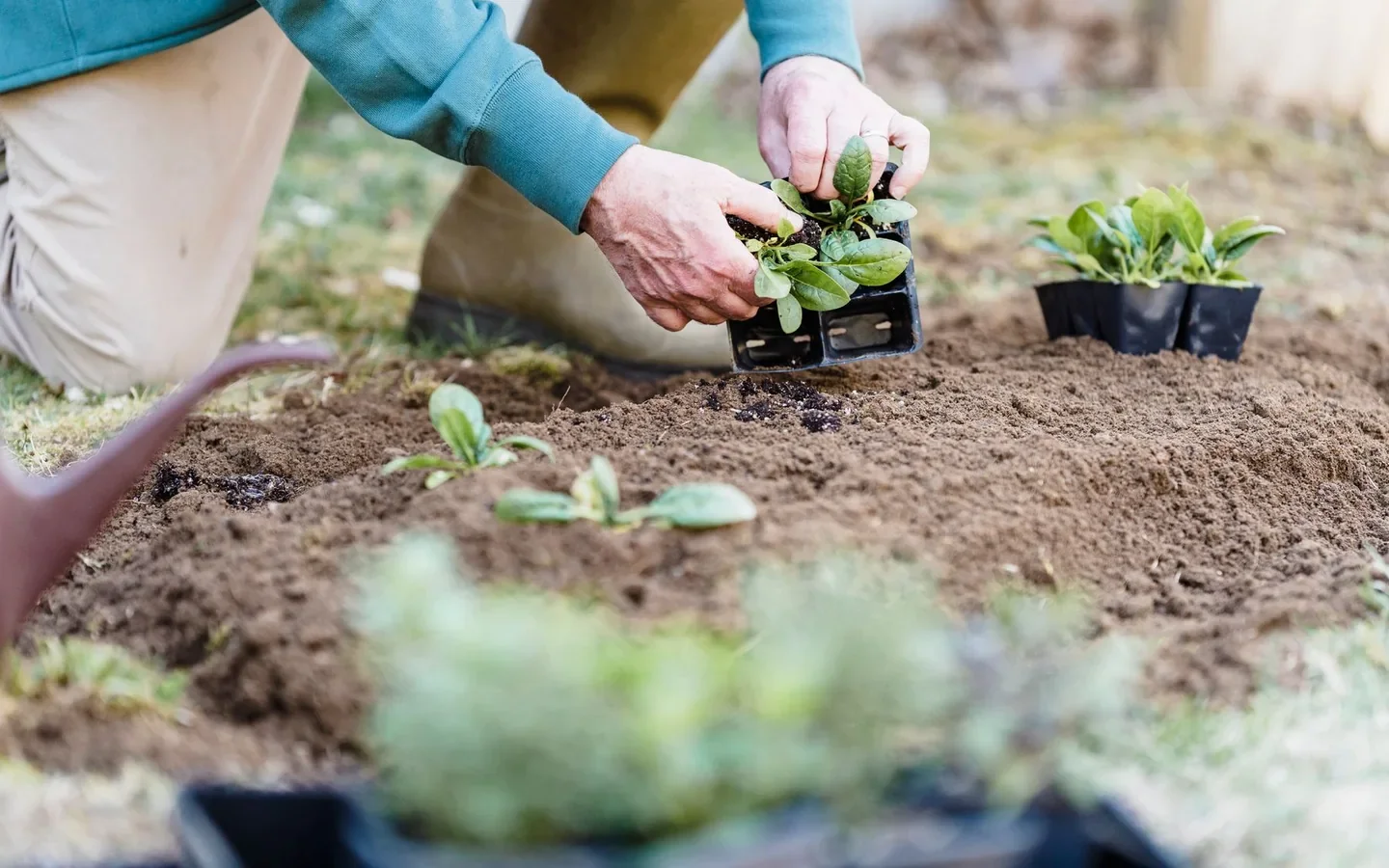
September is one of the most useful planting months in a British garden. The ground often retains some summer warmth, autumn rain helps new roots establish and there is still time to get selected crops growing before winter.
But September isn't simply another August. Daylight is shortening rapidly, and plants you sow now must tolerate autumn conditions or be intended to overwinter. A packet of tender French beans sown on a cold northern allotment in late September is unlikely to give the same result as a hardy spinach variety.
What can go in the ground this month?
| What to plant | Best approach | Main consideration |
|---|---|---|
| Winter spinach | Direct sow in suitable soil | Choose a hardy variety; protect if required |
| Winter lettuce | Sow or plant young transplants | Growth slows in short days |
| Rocket and hardy salad leaves | Small direct sowings | Flea beetle and cold protection |
| Overwintering onion sets | Plant autumn-specific sets | Good drainage and bird protection |
| Spring cabbage | Plant out sturdy young plants | Keep pigeons off |
| Hardy annual flowers | Sow outdoors in suitable beds | Good drainage prevents winter losses |
| Daffodil bulbs | Plant promptly in early autumn | Allow rooting time before winter |
| Crocus corms | Plant spring-flowering types | Avoid persistently wet soil |
| Hardy perennials | Plant container-grown stock | Water in and allow room to mature |
| Strawberry runners | Plant well-rooted young plants | Keep the crown at soil level |
A warm coastal garden may have a longer sowing window than an exposed Lancashire plot. Check the particular cultivar and the weather instead of relying on a date alone.
Sow winter spinach and suitable salads
Winter spinach can establish in September and provide leaves in mild periods, particularly where protection is available. Choose varieties described as hardy or suitable for autumn cultivation.
Prepare a fine seedbed, sow at the packet's recommended depth and thin seedlings before they become crowded. Keep the ground lightly moist while germination occurs.
Winter lettuce and rocket can also be useful. A succession of modest sowings is more sensible than putting a huge quantity into one bed just as growth begins to slow.
An unheated greenhouse or cold frame may extend the picking season, although neither produces summer-level growth during December.
Overwintering onion sets
Autumn-planted onion sets are specially selected for overwintering. Plant them in September or October, according to the variety and local conditions.
Choose sunny, free-draining ground. Set the small bulbs with their tips just visible at the surface and leave room for full-sized onions.
Birds sometimes lift newly planted sets before they root, so use temporary suitable protection if this happens locally.
Don't use leftover spring-only sets and expect them to tolerate the same cold conditions. Our guide to overwintering onions covers planting and aftercare in more detail.
Spring cabbages for next year
Spring cabbage plants raised earlier in summer can be ready to set into their permanent positions in September.
Choose compact, healthy transplants with enough root development to withstand autumn weather. Space according to the intended variety and harvest type.
Pigeons can strip young brassicas rapidly. Use secure wildlife-safe netting supported above the leaves and check that no animals become trapped.
If you have clubroot problems in the bed, don't assume moving cabbages a few centimetres will solve a soil-borne disease.
Hardy annuals for earlier flowers
Some hardy annuals can be sown in autumn for flowering the following year. Candidates include cornflowers, calendula, larkspur and some poppies, provided they suit the site.
Sow into a fine, well-drained seedbed at appropriate spacing. Thin seedlings to prevent congestion before winter.
In cold wet soil, autumn sowings may fail or be damaged. If your plot is exposed, you can save the seed for spring or start suitable plants in modules under protection.
Read individual seed-packet instructions. "Hardy annual" doesn't mean every type will grow happily in standing water.
Daffodils and other spring bulbs
Daffodils benefit from early autumn planting, commonly September, so that roots develop before winter.
Crocuses and various smaller spring corms also suit autumn planting. Tulips are often planted later, typically in November, when soil is cooler.
Choose firm, healthy bulbs and ensure the ground drains well. A soggy clay basin is a poor position for many bulbs.
See our daffodil planting guide for depth and timing, and tulip planting calendar for the important difference between the two.
Plant hardy perennials while soil is warm
September is useful for planting many container-grown hardy perennials. The soil often remains warm enough for roots to establish, while lower temperatures reduce moisture stress.
Choose plants matched to the actual light and soil conditions. A sun-loving salvia won't flourish in deep shade simply because the calendar says autumn is ideal.
Water after planting if the soil is dry. Apply an appropriate mulch around—not over—the crowns of plants that resent winter wet.
Check mature widths before planting several new pots together. Our plant-spacing guide helps prevent a border becoming crowded next summer.
Strawberries and rooted runners
Healthy rooted strawberry runners can be planted in September to give them a head start for the following season.
Place plants in fertile, well-drained soil, with crowns level with the surrounding surface. Planting crowns deeply can encourage rot.
Water during dry spells while roots settle. Use clean, healthy stock rather than moving disease from an exhausted old strawberry bed.
If the site is badly infested with perennial weeds, prepare a fresh area rather than planting into competition that you'll be unable to remove later.
What about garlic?
Garlic is usually planted from autumn into winter, with timing depending on the cultivar and growing conditions.
In many British gardens, October or November is more typical than early September. There is no advantage in forcing cloves into unsuitable warm or very wet soil before their recommended window.
Check the variety's supplier instructions and prepare a weed-free, sunny bed now.
Our garlic planting calendar helps choose a suitable month rather than treating every bulb as interchangeable.
Can fruit bushes or trees be planted?
Container-grown fruit bushes and trees can often be planted during suitable mild autumn conditions.
Bare-root fruit trees and hedging stock normally become available after dormancy begins later in autumn. September is often a good time to order them and prepare planting locations, not to expect dormant bare-root plants to be ready.
Choose a site with enough light and mature growing space. Don't plant an apple tree where its eventual canopy will overwhelm a small path.
Prepare support and watering access before planting substantial new shrubs.
Planting in containers during September
Containers can be refreshed with hardy bedding, compact evergreens and appropriate spring bulbs.
Choose a frost-resistant pot with drainage holes, fill it with suitable peat-free compost and allow enough root space.
Late summer bedding might still be flowering, so you don't have to empty every pot on 1 September. Replace only what has finished and plan spring-flowering layers separately.
Remember that exposed pots can dry out in wind despite cool weather. Check compost rather than assuming autumn rain reaches everything.
Jobs to avoid doing too early
Tender vegetables such as courgettes, outdoor tomatoes and most summer beans are not sensible September sowings for harvesting outside before winter.
An autumn planting chart is also not a reason to divide a plant that is flowering strongly or to dig saturated soil.
New lawns can establish well from seed in September, but that's a separate task with careful seedbed preparation rather than simply scattering grass seed between crops.
Match every job to the available light, local frost risk and condition of the soil.
September planting in northern and southern gardens
In southern coastal locations, autumn remains mild longer, and leafy crops may continue making useful growth.
In Lancashire and other cooler or more exposed areas, the early part of September is often preferable for establishing winter salads. Hardy transplants can be more reliable than late sowings.
Use fleece or cold frames where appropriate but allow ventilation; constantly sealed coverings can create damp disease-prone conditions.
Avoid a rigid national timetable. A sheltered warm wall and an open windy allotment only a few miles apart can behave differently.
A straightforward September weekend plan
First, remove exhausted summer crops and clear obvious weeds without digging into saturated soil.
Next, sow a modest area of spinach or salad leaves and plant any ready spring cabbage transplants.
Then plant early spring bulbs and pot up winter bedding. Finish by checking whether there is room for a few well-rooted strawberry plants or hardy perennials.
Leave part of the plot empty and protected if it is needed for early spring vegetables. The objective isn't to plant every exposed inch.
Quick answers
What vegetables can I plant in September in the UK? Suitable winter spinach, winter lettuce, rocket, overwintering onion sets and spring cabbage transplants are common options.
Is September too early for tulips? Tulips are generally better planted later in autumn, often November.
Can I plant daffodils in September? Yes. It's normally an excellent time.
Can I plant perennials now? Many hardy types establish well in early autumn if soil is workable and watering is managed.
September rewards a little selectivity. Plant the hardy crops and bulbs that benefit from autumn conditions, and save the tender summer vegetables for their proper season.