
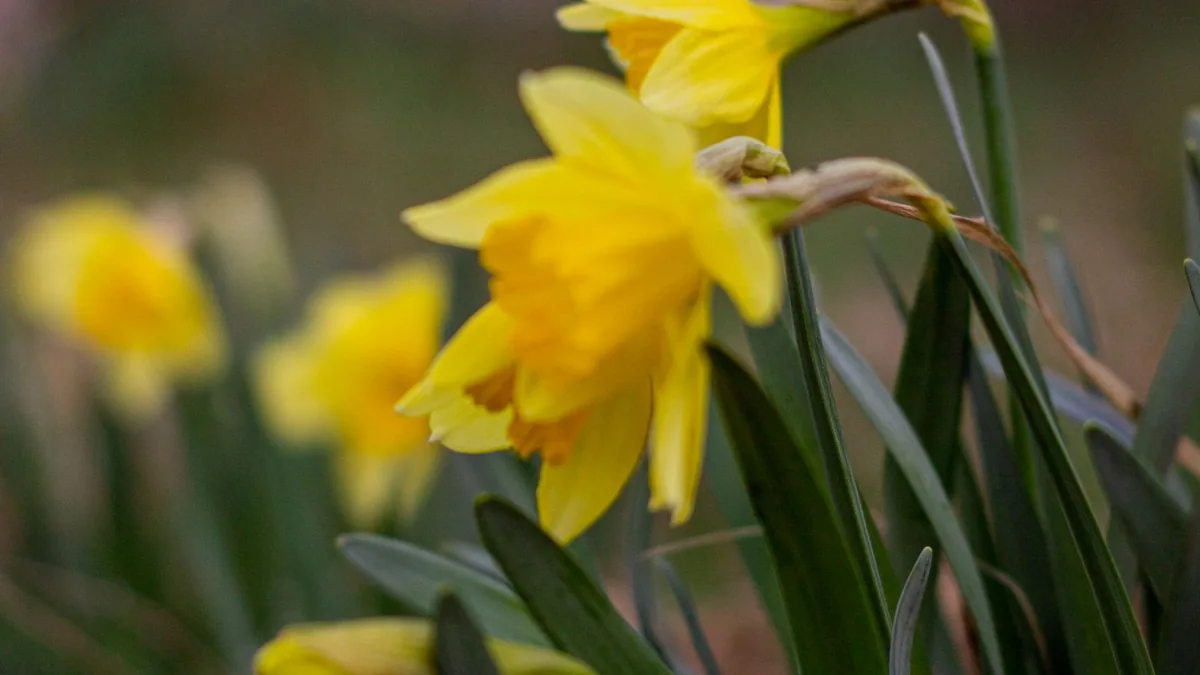
September is the best month to plant daffodil bulbs in the UK. They need time to develop roots before winter so they can produce strong leaves and flowers when spring arrives.
You can plant them in borders, pots and grass. The important things are timing, planting depth and drainage. Daffodils are generally straightforward once established, but bulbs left too long in a warm shed or planted into persistently waterlogged ground can perform poorly.
And if you've found an unopened bag in January, don't throw it away just yet. There are still sensible options.
Daffodil planting calendar
| Month | What to do |
|---|---|
| August | Buy bulbs if you want the best choice; prepare the planting area |
| September | Ideal time to plant most dry daffodil bulbs |
| October | Plant as soon as possible if you've missed September |
| November–December | Plant healthy leftovers in workable soil; flowering may be reduced |
| January–February | Plant sound forgotten bulbs rather than storing longer, but results are uncertain; buy growing potted plants for reliable immediate colour |
| March–April | Enjoy flowers; plant container-grown daffodils carefully and allow foliage to continue growing |
| May–June | Leave leaves to die back; divide congested established clumps when appropriate |
This is a UK guide, not a promise that every cultivar flowers in March. Early miniature daffodils may flower in February; later types can still be blooming in April or even early May.
Why September is better than November
A daffodil bulb isn't simply waiting in the ground until spring. After planting, it develops roots during autumn and uses those roots to establish before flowering.
Early planting gives it a longer period in suitable soil. If you wait until the ground is already very cold, the bulb may have less time to root well, even if it remains healthy.
Tulips follow a different calendar and are commonly planted in November. Don't assume daffodils should wait alongside them.
If you're filling one border with both, plant the daffodils first and add tulips in their normal later window. Our tulip bulb planting guide covers the difference.
How deep should you plant daffodil bulbs?
A useful guide is to plant them at about three times the bulb's own height deep, measured from the base of the bulb to the soil surface.
For example, a bulb that measures 5cm tall would generally have its base around 15cm below the surface. Smaller bulbs need proportionately less depth.
That isn't a rule to force onto every unusual species or growing system. Follow the supplier's instructions where they differ, particularly for specialist varieties or very shallow containers.
Set each bulb with the pointed end upwards and the flatter basal plate downwards. If the shape is unclear, look for the old root plate.
Firm the soil gently after covering, but don't stamp heavily on wet ground.
How far apart should daffodils be?
For natural-looking planting, allow roughly 10–15cm between many ordinary garden bulbs, adjusting for bulb size and the variety's instructions.
Smaller miniature varieties can often be planted more closely. Tall or vigorous daffodils need enough room to develop leaves and increase into clumps.
A scattering of single bulbs can look rather lost. Groups of five, seven or more generally create a stronger display than a ruler-straight row.
If you want drifts in a lawn, scatter bulbs loosely and plant them where they fall. Avoid planting every bulb at precisely the same interval; nature rarely produces perfect polka dots.
The right place to plant daffodils
Daffodils grow well in sun or light shade and soil that drains reasonably. Under deciduous trees is often a good position because the bulbs receive plenty of light before the canopy fills in.
Avoid ground that sits waterlogged throughout winter. Prolonged saturation can cause bulbs to rot.
In heavy clay, improve soil structure over time or choose a raised planting area. Don't dig a deep bulb-shaped hole in dense clay and fill it with loose gravel; that can simply hold water around the bulb.
Daffodils will also tolerate growing among other perennials that emerge later in spring. Their leaves can finish feeding the bulb before taller summer growth covers the border.
How to plant daffodil bulbs in a pot
Choose a container with drainage holes and enough depth for the bulbs' roots and planting requirements. A shallow ornamental bowl may look good in photographs but is not always suitable for long-term growth.
Use a good-quality peat-free potting compost suited to bulbs. Set the bulbs at the correct depth, allow room around them and cover with compost.
For a temporary spring display, bulbs can be packed more closely than they would be in the ground, provided they aren't crushed together and the pot is large enough. Once the leaves have died down, consider moving the bulbs into the garden at their normal depth for future years.
Place the pot outdoors in a suitable position so the bulbs experience the natural seasons. Keep compost moist enough for establishment without leaving it soaked.
Winter rain can be excessive, so raise pots if drainage holes become blocked. Our guide to protecting pots from frost covers the added risks for container plants.
Can you plant daffodil bulbs in grass?
Yes, and this is one of the easiest ways to create a spring display that returns year after year.
Choose a lawn that isn't excessively waterlogged or deeply shaded. A bulb planter can be useful for making individual holes, though it works poorly in sticky, saturated clay.
Plant bulbs at the proper depth, replace soil carefully and press the turf back into place.
The main commitment comes after flowering. You must allow the daffodil leaves to remain until they turn yellow and die down naturally. If you mow the grass short while the daffodils still have green leaves, you reduce the energy returned to the bulbs and may weaken future flowering.
That makes naturalised bulbs particularly suitable along lawn edges or in areas you can leave uncut into early summer.
Is it too late to plant daffodils in December or January?
It's later than ideal, but sound bulbs are often worth planting rather than leaving them to dry out further.
Check each bulb before starting. Healthy bulbs should be firm, without soft rotten areas, extensive mould or a foul smell. Some may have already begun to shoot; handle those carefully.
Plant healthy bulbs into workable soil or a sufficiently deep container with drainage. Don't force them into frozen or waterlogged ground.
Set realistic expectations. Late-planted bulbs may produce shorter stems, delayed flowers or only leaves in their first season. If they remain healthy, they may settle and perform better the following spring.
If you need flowers for a definite date, buy potted daffodils already growing rather than trusting forgotten dry bulbs.
Our winter bulb planting guide covers different bulb types and their rescue options.
Can you plant daffodils while they're flowering?
Daffodils sold in pots with leaves and buds can be planted carefully into the garden when conditions are suitable. Avoid breaking the root ball and keep the plants at their existing growing depth.
If the ground is frozen or soaked, leave them in their container in a suitable cool, bright position until the weather improves.
Once flowering finishes, remove the old flowerheads if you want to discourage seed production, but keep the leaves intact.
Indoor 'forced' daffodils have had their flowering brought forward under controlled conditions. They may need time to recover and don't always flower strongly in the garden the following season.
What to do after daffodils finish flowering
The most important job is not cutting the leaves off too soon.
While foliage is green, it is still photosynthesising and building up the bulb's reserves. Wait until leaves have naturally yellowed and are beginning to die down.
You can remove spent flowers, especially in borders, so the plant doesn't spend energy producing seed. In naturalised drifts where you want self-seeding, leaving selected flowerheads is an option.
Container-grown daffodils may benefit from a suitable high-potassium feed while the leaves are still growing, following the product instructions.
Don't tie the leaves into knots. That reduces their exposed surface and doesn't help the bulb.
Why didn't my daffodils flower?
The answer depends on the leaves, bulbs and site.
Lots of leaves but no flowers can be caused by congested clumps, cutting foliage too early, excessive shade or poor growing conditions. Newly planted, undersized or very late bulbs may also need time.
No growth at all suggests you should investigate bulb condition, planting depth, waterlogging or disturbance. A rotten or missing bulb cannot send up flowers.
Short or weak stems may reflect late planting, poor establishment or an unsuitable container.
If an established clump has gradually stopped flowering, consider lifting and dividing it after the foliage has finished. Replant healthy bulbs into suitable soil at the proper depth.
Are daffodil bulbs safe around pets and children?
Daffodil bulbs and other plant parts are poisonous if eaten. The bulbs can be mistaken for onions, particularly when stored loose in an unlabelled bag.
Keep them clearly labelled and separate from food. Wear gloves if handling bulbs irritates your skin and wash your hands afterwards.
If a person or pet has eaten daffodil material, seek appropriate medical or veterinary advice promptly.
The simplest planting plan
Order bulbs in late summer, plant in September in sun or light shade, and aim for a depth of about three times the bulb's height.
Keep them out of waterlogged soil, group them for a natural display and let the foliage die back after flowering.
Do those few things well and you can enjoy the same daffodils returning for years rather than buying replacements every spring.