
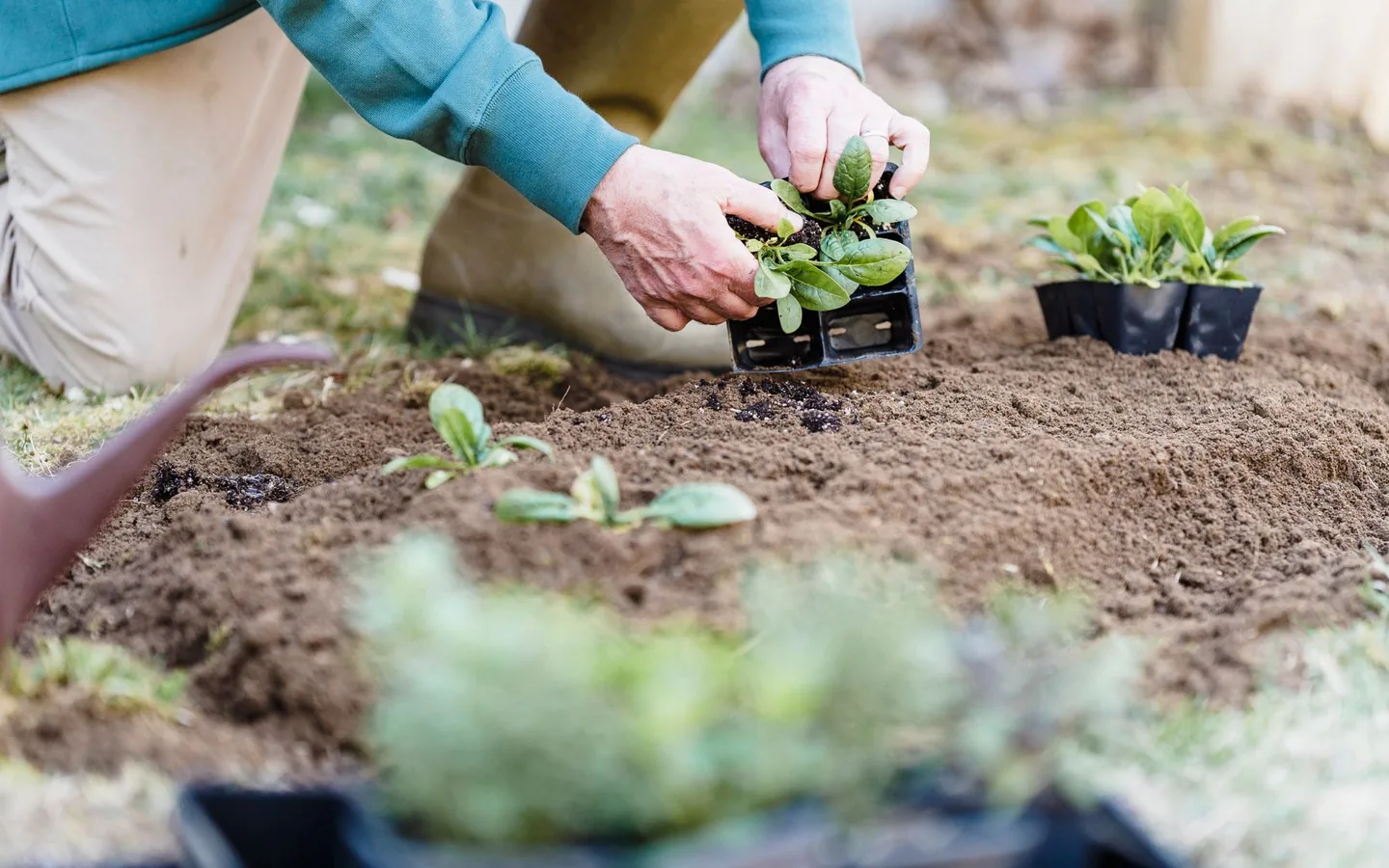
May is one of the busiest planting months in the UK. Beds are warming, early seedlings are ready to move and garden centres are packed with summer plants.
Yet one cold night can undo weeks of work. The important distinction is between hardy crops that can go outside in workable soil and tender plants that should wait until the last frost has passed.
May planting calendar
| Plant or crop | May approach | Main caution |
|---|---|---|
| First and second early potatoes still unplanted | Plant promptly if soil suitable | Harvest will be later |
| Maincrop potatoes | Early May can still be suitable | Follow variety and local conditions |
| Broad beans and peas | Sow or transplant as appropriate | Protect from pests |
| Beetroot and carrots | Direct-sow outdoors | Avoid dry or cloddy seedbeds |
| French and runner beans | Sow later in May as soil warms | Frost-sensitive |
| Courgettes, pumpkins and squash | Plant after frost | Harden off well |
| Outdoor tomatoes | Often late May/early June | Need shelter and warm nights |
| Dahlias | Plant established plants after frost | Support tall varieties |
| Summer bedding | Usually after frost | Cold wind can damage plants |
| Perennial pot-grown plants | Often suitable in workable soil | Water during dry spells |
A sheltered lowland garden may safely plant tender crops before an exposed upland site. Check local weather rather than one nationwide calendar.
First: find out whether frost is still possible
A warm May afternoon isn't enough evidence. Frost can occur late in inland, northern and high-altitude gardens.
Keep vulnerable seedlings under cover until you can harden them off and plant during a suitable forecast window.
If a tender plant must be put outside early, have a realistic protection plan rather than relying on one thin fleece sheet through a severe freeze.
Our frost protection guide explains suitable temporary covers and their limitations.
May vegetables to sow outdoors
As soil warms, beans become more practical to sow, especially towards late May.
Carrots, beetroot, peas, radish, spring onions and many salad crops can also be direct-sown if soil and packet conditions are appropriate.
For small gardens, use succession sowing: a short row of radishes each fortnight is usually more manageable than a whole bed ripening at once.
Don't bury seeds deeper than the packet recommends in an effort to protect them from birds.
Runner and French beans
Both need warmer soil than broad beans, and shoots are vulnerable to frost.
Sow outdoors in a suitable warm spell later in May, or start in modules under protection and transplant once nights are reliably mild.
Runner beans need strong climbing support; dwarf French beans usually require less.
Prepare the frame before planting so you're not driving stakes through established roots.
Planting courgettes and squash
Courgettes and squashes grow rapidly and dislike frost. They are often ready to plant from late May in milder gardens and early June in colder ones.
Give each plant the mature area it needs. A courgette that fits comfortably into a 10cm pot now can cover a large patch of border by July.
Water the root ball after transplanting and mulch appropriately, leaving the crown clear.
Avoid crowding multiple vigorous squash plants into one narrow raised bed.
Outdoor tomatoes
Outdoor tomato plants need a warm sheltered position and sufficient time to ripen.
For many UK sites, late May or early June is safer than early May. Plants should be hardened off gradually before transplanting.
Cordon tomatoes require sturdy supports and ongoing training. Compact bush varieties may work well in pots or growbags.
Use a good growing medium and monitor moisture throughout summer.
Our how to harden off seedlings guide explains the transition from indoor protection to outdoor conditions.
Planting summer bedding
Pelargoniums, petunias, busy Lizzies, cosmos and many other summer bedding plants are frost-sensitive.
Garden centres may sell them from early May, but that doesn't mean they can immediately stay outdoors in every UK region.
If you purchase early, keep plants in a bright sheltered frost-free place and gradually harden them off.
Prepare beds with suitable soil and space plants for their eventual spread, not their current pot size.
Dahlias and summer-flowering tubers
Dahlias can be planted outdoors as established leafy plants once frost risk has passed.
Dormant tubers may be planted into workable soil earlier where conditions suit, but wet cold soil can cause rot.
Large dahlias need supports, ideally positioned at planting rather than driven through the tubers later.
Our overwintering dahlias guide explains what happens at the other end of the season.
What can you plant in containers?
May is ideal for preparing summer pots and baskets, provided tender plants stay protected until appropriate nighttime temperatures.
Choose containers with sound drainage holes and a suitable peat-free mix. Think about the mature size and root demand of the plants.
Group crops with compatible moisture needs rather than mixing drought-loving herbs and very thirsty summer bedding in one small pot.
Use the pot and container compost calculator before buying large quantities of growing medium.
Herb planting in May
Hardy herbs such as chives, parsley, sage and thyme can often be planted in suitable spring conditions.
Basil is tender and generally prefers warmer nights; keep it protected until conditions are reliable.
Mediterranean herbs usually need good drainage and sun, not constant watering or excessively rich soil.
Mint spreads vigorously, so a dedicated container may be easier to manage.
What about fruit plants?
Pot-grown strawberries can be planted into suitable prepared soil, and fruit shrubs may still be planted if watering and establishment conditions are manageable.
However, large fruit trees planted in late spring may need careful summer irrigation. Autumn planting can be easier for some trees.
Protect existing fruit blossoms from late frost where practical and support pollination by avoiding unnecessary disturbance of beneficial insects.
Don't bury graft unions or tree root flares when planting.
Preparing soil for new plants
Remove persistent weeds and loosen compacted ground only when it is workable.
Incorporate appropriate mature organic matter where needed, or mulch the surface after planting.
Don't dig heavy clay while it's saturated; plant later into healthier soil rather than creating a smooth-sided waterlogged hole.
Our how to prepare soil for spring planting guide covers practical ground preparation.
Watering newly planted crops
Fresh transplants need adequate moisture while roots establish.
Water the root ball and surrounding soil gently, checking that moisture penetrates rather than running across the surface.
Once plants are established, vary watering by weather, rooting depth and crop. Avoid a rigid daily flood of already wet soil.
Mulch suitable plants to reduce evaporation but keep wet material away from sensitive stems.
May planting jobs to postpone
Wait on tender beans, tomatoes, squash and summer bedding if the weather remains frosty.
Avoid planting an expensive large tree in a heatwave without a watering plan.
If beds are waterlogged, work on drainage first rather than burying seeds in saturated soil.
Don't replace a healthy shrub just because it hasn't leafed out as quickly as its neighbours.
Common May planting mistakes
- Assuming every part of Britain has the same last frost date.
- Planting tender bedding outdoors straight from a warm greenhouse.
- Crowding young courgettes and tomatoes by their pot size.
- Forgetting to harden off seedlings.
- Placing basil in cold wet soil.
- Buying more bedding than pots can support.
- Watering every new plant identically without checking root moisture.
Can I plant tomatoes outside in early May?
In most UK gardens it is safer to wait until frost risk has passed, commonly late May or early June.
Is May too late to plant potatoes?
Not necessarily, especially early May for maincrops. Later planting can delay harvest and reduce growing time.
Can summer bedding go outside in May?
Yes when nights are reliably frost-free; this may be later in northern or exposed gardens.