
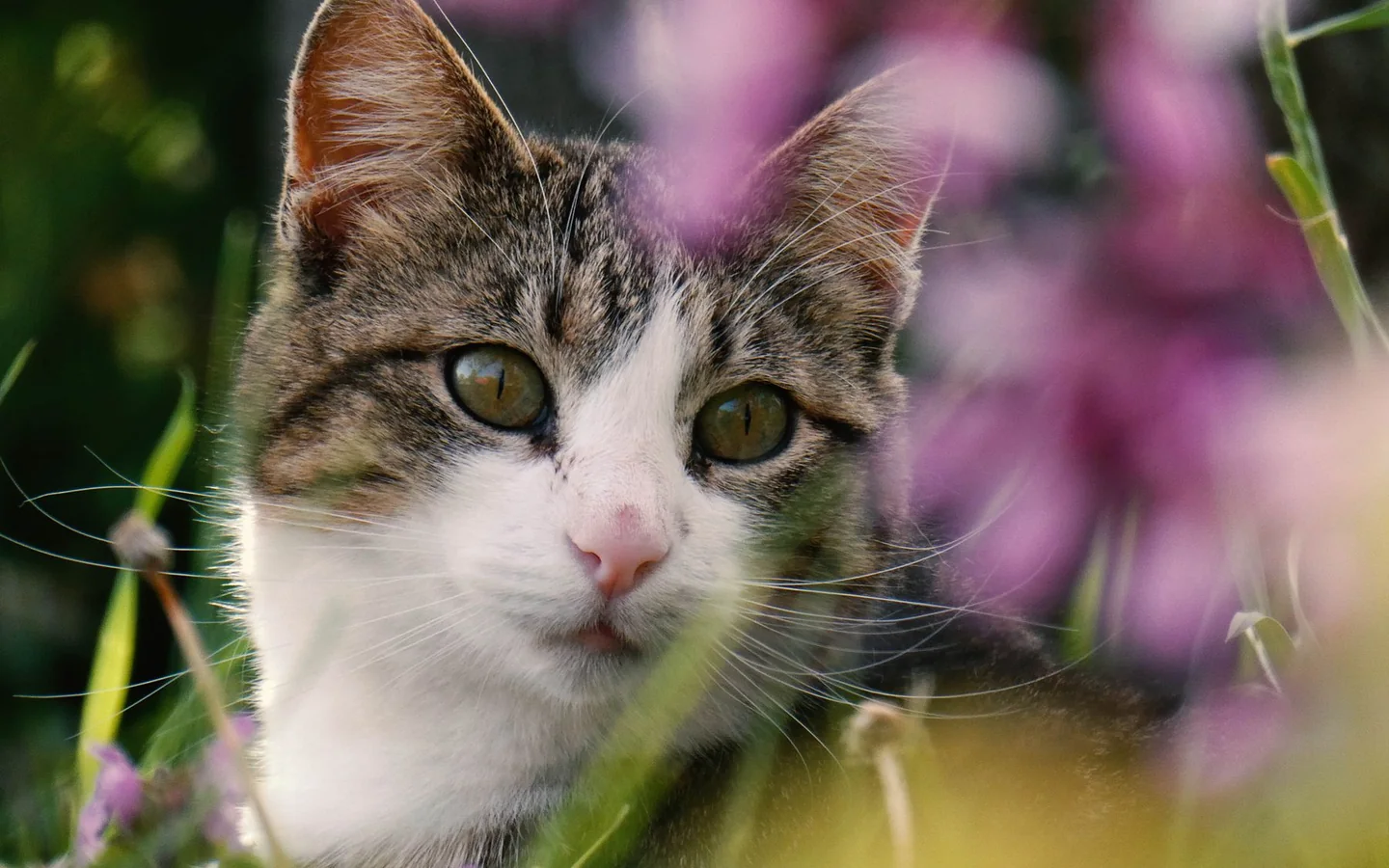
Freshly turned soil is appealing to cats: it's soft, easy to scratch and often in a quiet sheltered spot. Unfortunately, that can mean scattered seedlings and faeces in the same bed you want to plant.
The most effective and humane approach is to make the specific bare soil less convenient to dig, while keeping the garden safe for cats, people and other wildlife.
Why do cats choose flower beds?
Cats may use loose soil to bury their waste, particularly where a bed is quiet and free of dense plants.
A newly prepared vegetable bed is especially attractive because the surface is soft and accessible. A bed filled with established ground cover is less convenient.
Not every hole is made by a cat. Squirrels, foxes and birds can also disturb soil, so look for tracks or observe discreetly before investing in deterrents.
What usually helps?
| Measure | Best use | What to watch |
|---|---|---|
| Secure temporary mesh over bare soil | New planting and seedbeds | Must be safe, taut and removable |
| Closely spaced mature ground cover | Long-term ornamental borders | Choose plants suited to the site |
| Large stones or suitable branch obstacles | Small bare gaps | Avoid sharp or unstable pieces |
| A suitable raised-bed cover | Vegetables and seedlings | Needs airflow and safe access |
| Motion-activated sprinkler | Particular entry route in suitable weather | Could startle neighbours or pets; avoid freezing conditions |
| Designated litter area for your own cat | Reduces demand for garden beds | Needs regular cleaning and cat acceptance |
There is no universal cat-proof plant, scent or gadget.
How to cover a newly prepared bed
Use a sturdy frame or securely supported mesh that prevents scratching but leaves room for seedlings to grow.
Avoid loose netting draped across the soil. Cats, birds and other animals can become entangled, and sharp wire ends can injure paws.
Check the cover after wind and remove or adjust it before stems become tangled. Keep access for watering and weeding.
For a small patch, a temporary rigid grid held securely above the soil can be more practical than fencing the whole garden.
Cover bare soil with suitable planting
Cats often favour open areas where they can dig and cover waste. Established ground cover can make these places less attractive.
Choose species by sunlight, drainage and mature spread. Hardy geraniums or suitable low shrubs may work in some borders, while a dry shady area needs different plants.
Don't crowd young plants on day one. Use a temporary cover while they establish, then allow their natural foliage to fill the gaps.
Our plant spacing calculator helps work out quantities once you've chosen an appropriate ground-cover species.
Do citrus, coffee and strong scents work?
Claims about orange peel, coffee grounds, garlic and strong household smells are common, but the results are inconsistent and often short-lived.
Never use essential oils, concentrated chemical mixes, mothballs or poisonous substances to repel cats. Some can harm pets or contaminate growing soil.
Sprinkling pepper or chilli powder is also a poor idea: it can irritate animals' eyes and noses, and a child or gardener can touch it accidentally.
Physical protection of the target bed is easier to control and doesn't rely on making an animal suffer.
What about motion-activated devices?
A motion-activated sprinkler can surprise a visiting cat with a brief jet of ordinary water. It may reduce repeat visits in suitable weather, though animals can learn or avoid its detection zone.
Position it so it doesn't spray pedestrians, neighbouring properties or doors. Disconnect and drain outdoor hoses during frost.
Ultrasonic devices are marketed for cats, but evidence of consistent long-term effectiveness is mixed. They may also be audible or disturbing to other animals.
Avoid using constant loud alarms or bright floodlights that create unnecessary disturbance.
How to protect vegetable beds
For a raised bed with newly sown carrots or salad, a well-fitted removable frame is often worthwhile until plants establish.
Ensure the mesh doesn't trap birds, block access or cause excessive heat. Vegetable crops still need enough light and ventilation.
If you're building a new bed, the raised-bed soil calculator helps estimate filling volumes—though a raised bed on its own won't keep cats away.
Cleaning up cat faeces safely
Wear gloves when removing faeces from beds. Bag waste appropriately and wash hands thoroughly afterward.
Cat faeces can carry infectious organisms, including Toxoplasma gondii. Pregnant people and immunocompromised gardeners should take particular precautions and may prefer to have someone else handle contaminated soil or litter.
Don't add cat faeces to an ordinary vegetable-garden compost heap. Follow local waste-disposal guidance.
If a bed used for food crops has been contaminated, remove visible waste safely, wash produce carefully and continue using sensible soil hygiene measures.
What if it's your own cat?
If practical, provide a designated suitable litter area in a safe sheltered position and clean it frequently.
Not every cat will use the area, and unfamiliar neighbouring cats may still visit. Avoid punitive training or frightening tactics.
If the cat is repeatedly toileting in an unexpected place, stress or health changes may also matter and warrant veterinary advice.
Should you speak to neighbours?
If a particular cat is visiting and you know its owner, a courteous conversation may help identify practical solutions, especially where both gardens share access.
Don't trap or attempt to relocate someone else's cat. Never injure, poison or frighten it deliberately.
Cats are companion animals and garden visitors. The aim is to protect plants while avoiding harm.
Long-term design changes
Make the vulnerable areas easy to protect temporarily and reduce large areas of bare worked soil.
A broad border with healthy ground cover, suitable mulch and well-defined paths may be less attractive for scratching than several exposed soft patches.
Mulch isn't automatically enough: some cats enjoy digging through loose bark or compost. A combination of planting and temporary mesh is often more effective.
Common mistakes
- Using loose netting that could entangle wildlife.
- Scattering irritating pepper, chilli or essential oils.
- Expecting one scented deterrent to work for months.
- Leaving newly sown beds exposed during the most vulnerable period.
- Putting cat waste into ordinary home compost.
- Assuming every disturbed bed was visited by a cat.
Can cats dig through mulch?
Yes. Some cats will move loose bark or compost, so mulch alone isn't dependable protection.
Is it safe to use plastic forks in a flower bed?
Exposed prongs can injure animals and people. A properly installed protective frame is a safer choice.
Will planting ground cover stop cats toileting?
Dense established planting often reduces accessible bare soil, but it cannot guarantee that no cat will visit.