
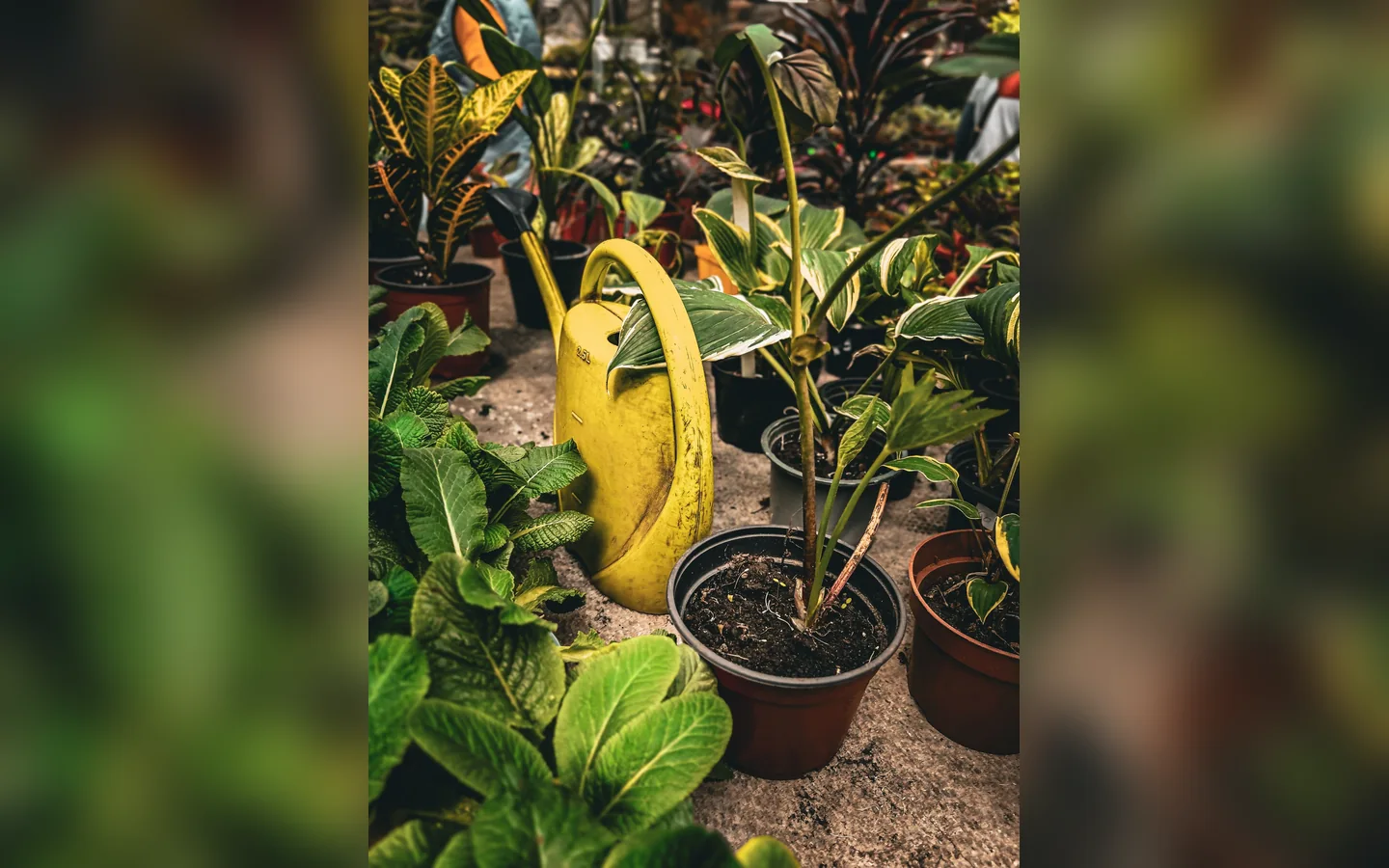
During a heatwave, the instinct is to water every plant several times a day. But established trees, new seedlings and hanging baskets have very different needs. And a flower wilting at midday may recover naturally by evening even when the roots still have moisture.
The useful response is to prioritise vulnerable root systems, water the soil properly and reduce unnecessary heat exposure, without stripping or overfeeding stressed plants.
Which plants need help first?
| Priority | Plants | Reason |
|---|---|---|
| Highest | Newly planted trees, shrubs and perennials | Roots haven't spread into surrounding soil |
| Highest | Pots, hanging baskets and growbags | Limited soil volume dries quickly |
| High | Seedlings and new transplants | Shallow roots cannot reach deeper moisture |
| High | Fruiting vegetables in containers | High water demand during fruit development |
| Medium | Established thirsty perennials | Needs depend on soil and root depth |
| Lower | Deep-rooted established drought-tolerant plants | Often cope with temporary dry conditions |
| Lower | Established lawns | May go dormant and recover after rain |
This isn't an absolute ranking. A mature tree on very shallow rocky ground may be in more serious trouble than a well-watered young plant in deep soil.
Check soil before watering
Push a finger into the root zone or use a soil probe away from the main stem.
If soil is dry at the depth where roots are active, water slowly enough to soak into that layer.
If the soil remains moist, a drooping leaf may be responding temporarily to intense heat rather than indicating immediate drought.
Don't flood a poorly drained bed solely because the leaves look soft at noon.
Water roots rather than spraying foliage
Aim water at the soil around the plant, not across leaves and flowers.
A gentle low-flow hose or watering can helps water infiltrate without running along paths.
For trees and shrubs, water a wider area around their rooting zone rather than one tiny spot against the trunk.
Thorough occasional watering is often more useful for established deep-rooted plants than frequent shallow splashes. Small seedlings need a different schedule because their roots occupy only the upper layer.
Morning or evening: which is best?
Early morning or evening usually reduces evaporation compared with midday.
If a pot-grown plant is severely dehydrated at 2pm, however, water it immediately. Waiting until evening to obey an arbitrary rule may make damage worse.
Avoid routinely soaking foliage in the evening where leaf disease is a concern.
The main aim is getting adequate moisture into the roots, not achieving an exact clock time.
Temporary shade for vulnerable plants
Seedlings and freshly transplanted crops can suffer leaf scorch under intense midday sun.
Use suitable horticultural shade mesh or a lightweight supported screen during peak heat, allowing air to pass through.
Do not lay dark plastic directly on leaves, where it can trap damaging heat.
Remove temporary shade or reduce it when the heatwave passes so plants that need strong light can resume normal growth.
Move pots off scorching paving
A container sitting on hot concrete or dark decking may have roots exposed to high temperatures.
Move suitable pots into a cooler position with morning sun or light afternoon shade.
Group containers where practical to reduce exposed sides, but maintain enough airflow and avoid blocking access.
The RHS suggests moving containers off hot hard surfaces into shade or onto appropriate cooler ground during extreme heat.
Our compost for pots and containers guide explains why pot size and growing-medium structure also influence moisture retention.
Should you mulch during a heatwave?
A suitable existing mulch layer can slow evaporation. But don't rush to cover bone-dry soil with thick mulch before watering it.
Water dry soil first, then use a suitable layer where it won't smother plant crowns.
If soil is deeply dry, RHS expert advice encourages dealing with moisture carefully rather than suddenly disturbing established roots and piling on fresh material.
Our mulch depth guide covers appropriate amounts and keeping trunks clear.
What about the lawn?
Established lawns can turn brown during prolonged drought, entering a temporary dormant state.
They often recover when normal rainfall returns. Intensive daily irrigation is not necessarily a sensible use of scarce water.
Raise the mowing height or postpone mowing during severe drought to avoid cutting away remaining photosynthetic leaf area.
Don't apply strong fertiliser to an already heat-stressed brown lawn.
Greenhouse temperature control
A closed greenhouse can become dangerously hot long before outside conditions seem extreme.
Open vents and doors where safe, use appropriate shading and ensure fans or automatic vent openers are working.
Water plants according to root demand. Spraying water over foliage repeatedly is not a substitute for ventilation.
Remove trapped dead leaves and keep containers arranged so air can circulate.
Our greenhouse ventilation in winter guide covers the underlying air-exchange principles, although summer cooling needs a more intensive approach.
Why tomatoes and cucumbers need attention
Fruiting crops in pots or growbags can exhaust their water reserve quickly in hot weather.
Irregular watering can contribute to problems including blossom-end rot in tomatoes. Aim for consistent root-zone moisture.
Avoid waterlogging roots in an attempt to keep every leaf fully upright through the hottest part of the day.
Harvest ripe fruit promptly and remove severely damaged growth only when appropriate.
Should you prune plants during extreme heat?
Avoid unnecessary hard pruning that exposes previously shaded stems and fruit to intense sunlight.
A plant with scorched leaf tips may still have healthy internal tissue. Wait until cooler conditions to assess how much growth is truly dead.
Remove broken dangerous branches as needed, but postpone cosmetic reshaping.
Do not use fertiliser to force tender new shoots while soil moisture is unreliable.
Water-saving priorities
- Use stored rainwater first where appropriate.
- Check the most vulnerable pots and new plantings frequently.
- Water deeply enough to reach active roots, not walkways.
- Repair leaking hoses and blocked drip lines.
- Group similar water-needing plants together where practical.
- Use suitable mulch after replenishing dry soil.
- Obey any local temporary water-use restrictions.
If water is limited, saving a recently planted fruit tree may be more valuable than maintaining a perfectly green established lawn.
What to do after the heatwave
Return vulnerable plants gradually to their normal light conditions.
Inspect whether leaves are truly dead or merely wilted and recovering. Prune only the damaged material that needs removal.
Check pots for root congestion and confirm drainage remains good.
Don't immediately feed every stressed plant. Let roots recover and monitor new growth first.
Common heatwave mistakes
- Watering every plant equally regardless of root depth.
- Letting young trees dry while irrigating established lawns.
- Adding thick mulch over bone-dry soil without first watering.
- Hard-pruning shrubs in fierce sunshine.
- Assuming a wilting plant must be dry despite saturated soil.
- Keeping a greenhouse shut during very hot afternoons.
- Waiting until evening to water a severely dehydrated pot.
Should I water plants twice a day in a heatwave?
Some small containers may need frequent watering; established deep-rooted plants often won't. Check moisture in each root zone.
Can burnt leaves turn green again?
Scorched dead tissue won't recover, but the plant may produce healthy new growth once conditions improve.
Should I fertilise plants after heat stress?
Not automatically. Correct moisture and temperature issues first and assess plant recovery before feeding.