
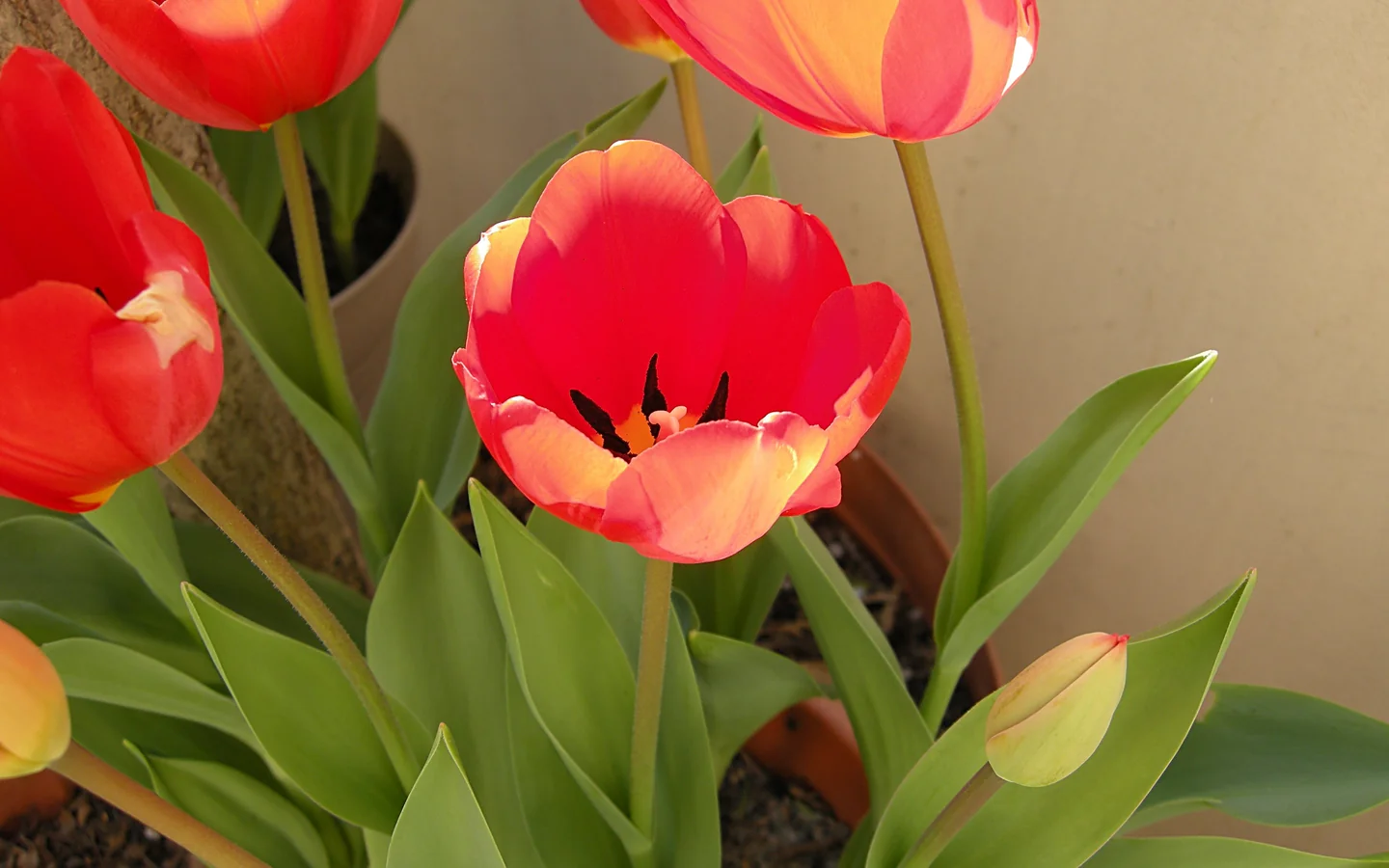
Tulips are brilliant container flowers. A single deep pot of bold red or pale pink blooms can give a front doorstep more colour than an entire border of small spring plants.
But a pot changes how bulbs behave. Compost can become waterlogged in a wet British winter, freeze harder than garden soil and dry unexpectedly when roots are active. A deep container with proper drainage is far more important than a fancy display recipe.
Start with the tulips you want
Most bedding tulips offer a reliable first-year display from healthy, flowering-sized bulbs. They come in early, mid-season and late forms.
Single Early and Triumph types can be suitable for pots; Darwin hybrids may be good choices if you hope for more than one season, provided conditions suit them.
Very tall types can look magnificent but may flop in exposed positions. Dwarf species tulips are useful for smaller containers and can sometimes perennialise more readily.
Check the variety's height and flowering month. Mixing randomly may produce three separate flowers rather than the simultaneous display in the catalogue picture.
When should tulip bulbs be planted?
Tulips are planted while dormant in autumn, generally September to November in Britain.
For many ordinary garden pots, November is a useful target, when soil is cooler and bulbs can root before spring. Planting a little earlier or later can work with suitable conditions.
Choose firm, healthy bulbs free from soft patches, mould and major damage.
Our tulip planting calendar explains timing across the country. This article concentrates on container growing and keeping the bulbs in good condition.
Choose a pot with real depth
A container at least around 30cm deep makes it easier to provide adequate bulb depth and rooting space.
A 40–45cm-wide pot can take a generous group of standard tulips. The RHS suggests around a dozen bulbs in a 45cm container for a conventional display, though fuller seasonal plantings can use more.
Make sure the pot has functioning drainage holes. A decorative planter without an outlet is a poor place to overwinter bulbs outdoors.
Choose a stable, frost-resistant material if the pot will stand on an exposed patio.
How many bulbs per pot?
Tulips look best as a group rather than one stem rising from an empty sea of compost.
A generous display might use roughly 10–12 standard bulbs in a 40–45cm pot, with adjustments for bulb size and depth. Some seasonal displays are more densely planted.
Leave a little space between individual bulbs rather than crushing them tightly together.
Small species tulips are often planted in groups at their recommended depth, with room to develop offsets if you want to keep them for later seasons.
The right compost mix
For seasonal bedding tulips, a useful option is three parts peat-free multipurpose compost to one part horticultural grit.
This helps provide a growing medium that retains enough moisture for roots while draining freely.
For bulbs you intend to keep for several seasons, a loam-based peat-free compost mixed with grit can provide more lasting structure.
Don't put an arbitrary thick layer of broken bricks in the bottom and assume it solves drainage. The whole growing medium and the container's outlet matter.
Our pot compost guide explains why moisture retention and aeration have to be balanced.
Step by step: planting tulips in a pot
- Check the container has drainage holes and is stable.
- Fill the lower part with moist, free-draining compost.
- Position the bulbs pointed end upwards.
- Allow a little space between neighbouring bulbs.
- Place them at roughly two to three times their own height deep, unless the variety instructions specify otherwise.
- Cover carefully without dislodging bulbs.
- Firm gently and leave about 2.5cm below the rim for watering.
- Water once to settle the compost.
- Stand the pot in a cool sheltered position where excess rain can escape.
- Label the varieties and expected flowering time.
If you are creating several pots, choose a colour theme rather than putting every spare bulb into every container.
What is a bulb lasagne?
A bulb lasagne is a deep container planted in layers to provide flowers at different times.
Large or later-flowering bulbs are placed in lower layers, with suitable smaller earlier bulbs above them.
Tulips may share a container with daffodils and crocuses, provided each is planted at the depth it requires and none is forced into insufficient root space.
Stagger bulb positions between layers. Don't stack the shoots exactly on top of one another or plant so densely that everything is competing for compost.
How to position pots during winter
Tulips need a cool dormant period, but cold soggy compost causes problems.
Stand pots on feet if their drain holes would otherwise be blocked by paving. Choose somewhere sheltered from constant driving rain.
If compost becomes sodden, move the pot temporarily beneath an overhang or into an unheated greenhouse until excess moisture has drained.
Do not place dormant outdoor tulip pots in a heated room for weeks. That disrupts their seasonal cycle.
Our frost protection for pots guide covers sensible winter safeguards without creating an airtight wet enclosure.
When to water tulips in containers
After planting, water if needed to settle the compost. Through winter, rainfall may supply enough moisture to outdoor containers.
Once shoots emerge in late winter or spring, check the compost regularly. Roots are actively drawing water and a sunny patio can dry a pot surprisingly fast.
Aim for moist, draining compost rather than constant saturation.
A few weeks without adequate moisture during active growth can shorten stems and flowering performance, even if the bulbs themselves survive.
Do potted tulips need feeding?
Healthy commercial bulbs usually contain enough reserves for their first spring flowers.
If you intend to keep the bulbs, a suitable high-potassium liquid fertiliser during active spring growth can help rebuild reserves. Follow the product label rather than applying an excessive concentration.
Stop feeding once foliage has naturally yellowed and died.
Feeding cannot repair a rotten bulb or compensate for a pot with no drainage.
Protect bulbs from squirrels
Grey squirrels can remove freshly planted tulip bulbs from containers.
A securely fixed wire cover over the soil surface can help while bulbs establish, provided it doesn't trap animals or block emerging leaves.
Lift or adjust the mesh before foliage is damaged.
Our guide to stopping squirrels digging up pot bulbs gives practical non-chemical options.
Avoid loose netting that can entangle birds and small mammals.
What to do when the flowers fade
Remove spent flowerheads if you don't want the plant to produce seed, but leave the green leaves growing.
The foliage replenishes the underground bulb. Cutting it off while green reduces the chance of flowering next year.
Continue suitable watering while leaves are active, then reduce it when they die back naturally.
Move a pot of yellowing leaves out of the main display if you want to use the patio for summer bedding.
Should you lift the bulbs?
For a spectacular uniform show in a prominent pot, fresh bulbs each autumn are usually the most predictable choice.
Some bedding varieties flower poorly in subsequent years. If you want to retain bulbs, lift only after the foliage has finished and the bulbs are dormant.
Dry and store healthy bulbs in a suitable ventilated place until autumn. Discard soft or mouldy stock.
Selected perennialising types and species tulips can sometimes remain in an appropriate pot for several seasons, though they may need dividing or fresh growing medium as they increase.
When tulips fail to flower in pots
If leaves emerge without flower buds, examine bulb size, light, winter drainage and whether green foliage was removed prematurely the previous spring.
If bulbs did not emerge at all, inspect for rot, animal damage or very poor planting conditions.
A few tiny daughter bulbs in a pot may need extra seasons to become flowering-sized.
Don't try to rescue soft rotten bulbs by feeding more strongly.
Common container mistakes
Using a shallow decorative bowl: leaves too little room for roots.
Blocking drainage holes: traps excess winter moisture.
Planting too close to the surface: increases exposure and reduces root depth.
Watering automatically throughout rainy winter: can cause saturation.
Cutting off green leaves after bloom: reduces future bulb strength.
Expecting every bedding cultivar to return: some are best treated as one-season displays.
Quick answers
How deep should tulips be in pots? Generally two to three times the bulb height, in a container deep enough to accommodate roots.
Can tulip pots stay outdoors all winter? Yes, if suitable frost-resistant containers drain well and receive appropriate shelter.
How many tulips fit a 45cm pot? Around twelve is a practical conventional starting point, with variation by bulb size and display style.
Should I replace tulip bulbs every year? For a consistently spectacular bedding display, often yes; perennial candidates may be grown on.
Plant for sound roots and reliable drainage first. Bright flowers next spring are the reward for getting those autumn basics right.