
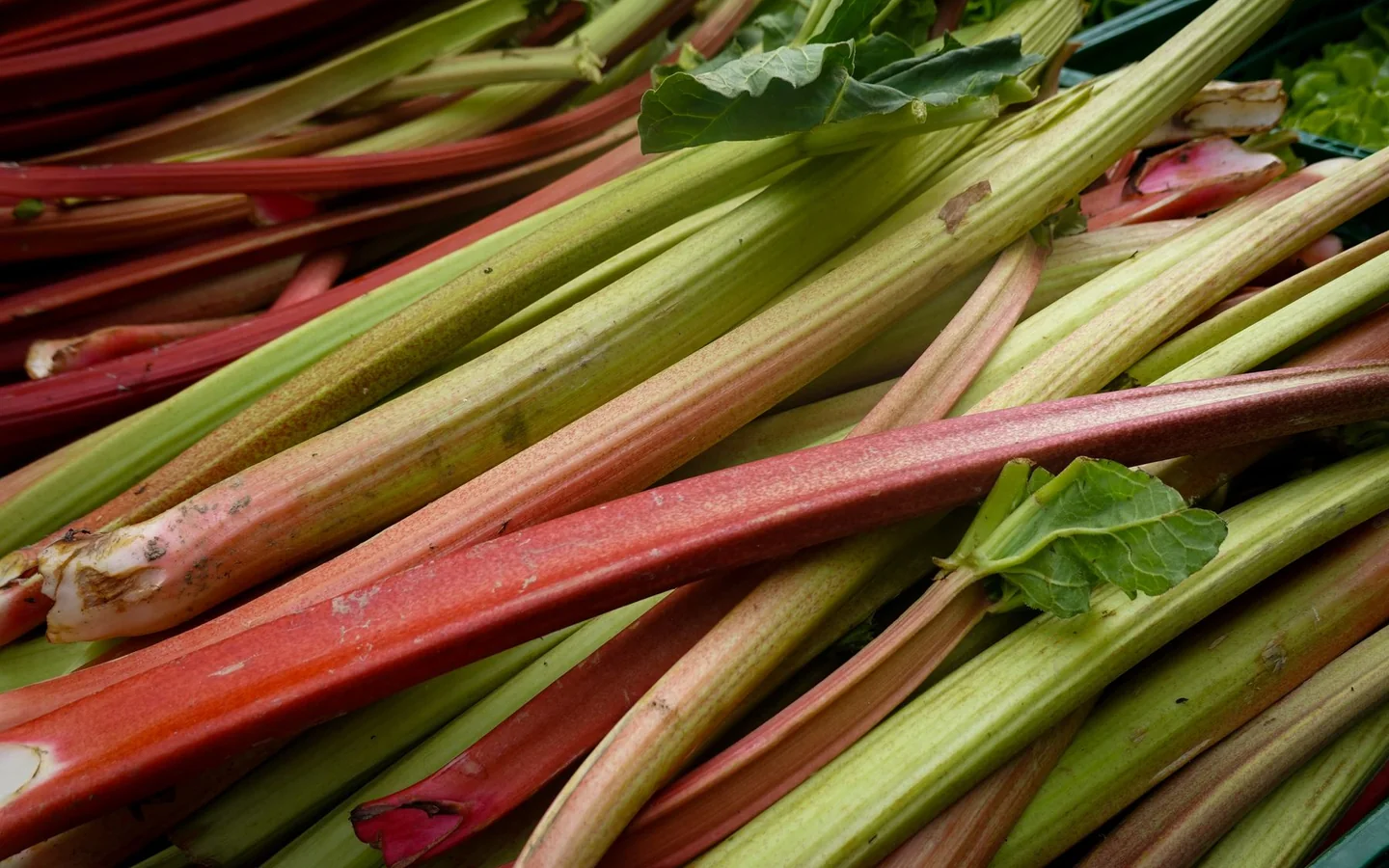
Rhubarb is a vegetable you plant once and can pick from for years. Its huge leaves need space, but an established clump asks for little more than decent soil, an annual mulch and some restraint when harvesting.
The biggest beginner's error is impatience. A newly planted crown needs time to build the root reserves that support future harvests. Pick too heavily in its first seasons and the plant can struggle for years.
What exactly are you planting?
Culinary rhubarb is a hardy perennial. It dies back in winter and sends up fresh leaf stalks from a crown in spring.
You can buy a dormant bare-root crown, usually in winter, or a plant already growing in a pot. A crown is not an ordinary root cutting: it needs healthy growing buds, which are where future stalks emerge.
Seeds are cheaper, but plants raised from seed vary more and take longer to crop. If you want a predictable variety and an earlier harvest, buy a named crown.
Where does rhubarb grow best?
Choose a position with full sun or light shade. Rhubarb tolerates a reasonably cool UK climate, but it dislikes ground that is persistently waterlogged.
Give each plant room. Mature clumps can spread 1.5m or more, so putting a crown in a gap between two shrubs rarely works for long.
A site close enough to reach in spring is useful; you don't need to bury it at the back of an allotment. Its large leaves also look good in a productive border provided they won't smother nearby plants.
Improve poor soil with well-rotted compost before planting. If your ground holds standing water all winter, consider a raised position or a generously sized pot.
When should rhubarb crowns be planted?
Bare-root crowns are normally supplied during dormancy, broadly November to March. Plant them while the soil is workable, not frozen or saturated.
Pot-grown rhubarb can be planted over a wider period, but spring and autumn are easier because roots won't be fighting summer heat and drought.
A crown bought in winter may look lifeless. Firm, healthy buds and sound roots matter more than visible leafy growth.
How to plant a rhubarb crown
- Remove perennial weeds from an area wide enough for a mature clump.
- Dig a hole wider than the roots, loosening compacted soil beneath.
- Mix well-rotted compost with the surrounding soil where needed.
- Set the roots into the hole with the growing tip just above the soil surface.
- Backfill, firm gently and water the soil around the roots.
- Mulch around—not directly over—the buds, leaving the crown free to grow.
Plants are often spaced about 75–90cm apart at planting, but allow for the much wider mature leaves when choosing their final position.
Do not plant the bud deep under a thick layer of wet compost. That is a good way to encourage crown rot.
Our soil preparation guide is useful if you are improving a neglected planting site.
The first three years: when can you pick?
This is the rule that saves new plants:
| Growing season | Harvest |
|---|---|
| First year after planting | Don't pick stalks; let the plant establish |
| Second year | Harvest only a small number of strong stalks |
| Third year onward | Normal spring harvest, without stripping the crown |
On an established plant, take no more than about one-third of the stalks at any one time. Some older advice mentions half, but the conservative approach helps protect vigour when conditions are less than ideal.
Stop routine picking by early summer, commonly the end of June, so the remaining leaves can replenish the roots. Weather and plant strength matter more than a precise date.
If a plant is thin, recently divided or drought-stressed, harvest even less.
How to pick rhubarb without damaging it
Pick stalks when they are a useful size, typically around 25–30cm long, and still firm. Colour isn't a reliable maturity test: some excellent rhubarb varieties stay partly green.
Hold the stalk close to the base, pull gently sideways and twist until it separates. Do not cut every stalk off flush, leaving stumps that can rot.
Remove the leaf blade promptly and wash the edible stalk before cooking. Never use the rhubarb leaf in food; it contains substances including oxalates that make it unsafe to eat.
Don't assume a very red stalk is sweeter. Variety and growing conditions both influence flavour.
Watering and mulch
Large leaves lose a lot of moisture in warm weather. Newly planted rhubarb needs regular watering while roots establish, particularly after planting a potted specimen.
Established crowns are more resilient but may still need a thorough soak during a prolonged dry spell. Avoid constantly wet, airless soil.
Apply a layer of well-rotted garden compost or manure around the plant in winter or spring, while keeping the active buds uncovered. This feeds the soil and reduces moisture loss.
If your plot is exposed and prone to summer drying, our irrigation planning guide can help make watering less haphazard.
Can rhubarb grow in pots?
Yes, but it is a big plant for a container. Choose a pot at least 50cm wide and deep, with drainage holes and a stable base. A compact variety is sensible.
Use a good-quality peat-free, soil-based compost. Water consistently during growth and replenish nutrients according to the compost's condition.
Container-grown plants dry out faster and eventually become crowded. If the crown fills the pot with roots and growth declines, consider dividing and repotting it.
A tiny pot on a hot patio may keep a plant alive without producing much worth harvesting. Our pot compost calculator helps estimate the amount needed for a genuinely large container.
When should you divide a rhubarb plant?
An established clump may benefit from division roughly every five years, particularly if the centre becomes woody and growth weakens.
Divide during dormancy, in late autumn or winter, choosing a frost-free workable day. Lift the crown carefully and split it into sections, each with healthy roots and at least one strong growing bud.
Replant the sound outer sections promptly. Remove rotten or obviously diseased pieces rather than sharing them.
Treat a division as a newly established plant: allow recovery and be cautious about harvesting straight away.
What is forced rhubarb?
Forcing means excluding light from an established dormant crown to produce earlier, paler, tender stalks. Cover the crown with a purpose-made forcing jar or a sturdy upturned container once winter chilling has occurred.
Check periodically without leaving it uncovered for long. Stalks grown in the dark will be paler and can appear earlier than the normal harvest.
Do not force a new, weak or recently divided crown. It uses stored energy, and a forced plant should be left unpicked for the rest of that growing season.
If you want reliable annual crops, force only one strong plant in a group and rotate which crown gets the treatment.
Problems that affect rhubarb
Thin stalks and small leaves: possible causes include an exhausted crown, overcrowding, dry soil or premature heavy picking. Look at the plant's history before adding fertiliser.
Leaves droop in hot weather: check soil moisture beneath the surface. A hot afternoon can cause temporary wilting, but persistent wilting with wet soil may point to root problems.
Soft, dark growth at the crown: check drainage and remove decayed material. Don't cover the buds with heavy mulch or keep them saturated.
Flower stems appear: remove flowering stems promptly if you want the plant concentrating energy on leaves and roots. A flower isn't automatically a sign that the whole plant is dying.
Leaves show holes: minor slug damage is common and doesn't necessarily affect the edible stalks.
The autumn and winter routine
Let healthy leaves die back naturally, then clear the old foliage once it has collapsed. This reduces untidy, wet debris around the crown.
The dormant roots generally don't need winter lifting. Rhubarb is hardy; drainage is usually a bigger concern than ordinary British cold.
Mark the crown's position so you don't accidentally dig through it while working the bed in winter.
Quick answers
Is rhubarb a fruit? Botanically it's a vegetable, but it is commonly cooked like a fruit.
Can you eat the leaves? No. Eat the leaf stalks only; the blades are unsafe as food.
Why is my rhubarb green? Many varieties naturally have green or green-red stems. Colour alone doesn't mean it is unripe.
How long will a plant live? A well-sited, regularly tended clump can remain productive for many years.
Rhubarb rewards patience. Give the crown space, leave it alone during its first season, and stop harvesting while it still has enough healthy leaves to power next spring's crop.