
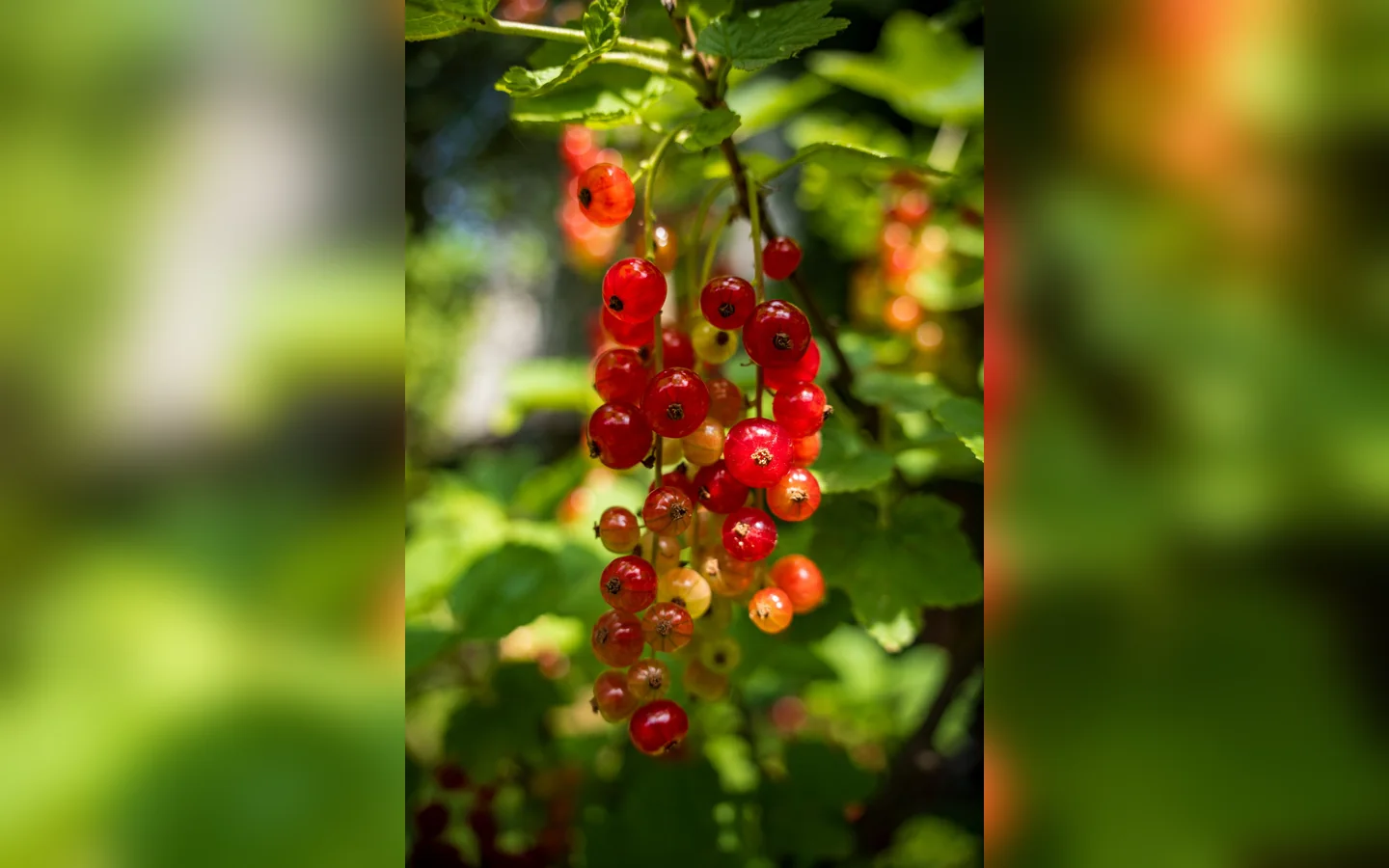
A redcurrant bush is a good choice if you want fruit without dedicating half the garden to a large tree. Its small glossy berries hang in long red clusters, which you can cut for desserts, jelly or freezing.
Redcurrants are fairly hardy and often crop well in Britain. The important routine is keeping a well-spaced framework of branches, then protecting the berries from birds just as the fruit colours up.
How redcurrants differ from blackcurrants
Both are members of the Ribes group, but they are managed differently.
Redcurrants fruit mainly on short spurs of older wood and around the bases of the previous year's shoots. Blackcurrants are usually encouraged to produce vigorous new stems because much of their crop is carried on younger wood.
That means you should not prune a redcurrant bush using the same method as a blackcurrant.
Whitecurrants are closely related and can generally be grown in the same way as redcurrants.
Choose a variety and plant shape
Many redcurrants produce ripe fruit from July, with early and later cultivars extending the harvest.
You can grow a traditional open-centred bush, a standard with a raised trunk or a single-stem cordon against supports.
For a small garden, a cordon can be especially efficient because the fruiting spurs are kept close to the main stem.
If you have space for a bush, choose a reliable cultivar and check its mature spread before buying.
Where should redcurrants grow?
Redcurrants prefer fertile, moisture-retentive but well-drained soil. They grow well in full sun and can tolerate partial shade, although fruit often ripens more reliably in good light.
A sheltered position makes harvesting more pleasant and reduces wind damage to heavily laden branches.
Avoid permanently waterlogged ground or places where large tree roots use most of the available moisture.
Our soil preparation guide can help improve poor soil before planting.
When to plant redcurrant bushes
Bare-root redcurrants are usually planted during the dormant season, broadly November to March, when soil is neither frozen nor waterlogged.
Container-grown plants can be established in other suitable weather, but hot dry conditions need much more watering.
Plant as soon as practical after bare-root stock arrives. Keep exposed roots cool and moist rather than leaving them unwrapped in the shed.
For an established new plant, allow enough space for maintenance and bird protection from the beginning.
Planting a redcurrant bush
- Remove perennial weeds from the proposed planting circle.
- Dig a hole wide enough to accommodate the roots without bending them sharply.
- Place the bush at about the depth it grew in the nursery.
- Spread out roots carefully or loosen a circling container rootball.
- Backfill with the original soil, adding well-rotted organic matter if needed.
- Firm gently and water in.
- Mulch around the root zone while keeping the stem base clear.
- Label the cultivar and establish any intended support structure.
Spacing depends on the training form. Traditional bushes generally need substantially more space than cordons.
Use our plant spacing calculator when planning a row of bushes, taking mature width into account.
Growing redcurrants in a container
It is possible, particularly if trained as a cordon or compact bush.
Choose a large stable pot with drainage holes, good peat-free growing medium and enough depth for healthy roots.
Container redcurrants need regular moisture during the growing season, especially when berries are swelling. Check the compost frequently in warm weather.
Feed according to the compost and plant's needs rather than applying excessive fertiliser. Repot or refresh growing medium when the root system becomes congested.
Our pot compost calculator can help estimate the amount of growing medium.
Watering in a garden bed
Water newly planted bushes during dry spells through their first couple of growing seasons.
Once properly established in ordinary soil, many redcurrants need little routine watering except during prolonged drought.
Mulch helps reduce evaporation and competition from weeds. Don't pile thick wet mulch against the trunk.
If leaves wilt despite moist ground, inspect root health and drainage rather than continuing to flood the bed.
How to prune a redcurrant bush
Redcurrants are usually pruned in late winter or early spring to create a balanced, open-centred shape.
Aim for a framework of roughly eight to ten well-spaced main branches, reducing congestion and removing crossing or damaged stems.
Don't strip out all older wood as you might for an established blackcurrant bush. Redcurrants carry fruiting spurs on that framework.
Use sharp clean secateurs and assess the overall shape before making large cuts.
Our winter pruning guide for blackcurrants highlights why the two currant types have different renewal needs.
Cordons for tight spaces
A cordon is trained along a support with one or more permanent stems and short fruiting sideshoots.
This method saves space and makes netting and picking easier. It does require more deliberate pruning than a free-growing bush.
Winter pruning maintains the long-term structure; summer pruning shortens excess new side growth to keep it manageable.
Tie the main stems to secure wires without binding the bark. Check ties as they thicken.
Feeding and mulching in spring
An established bush usually benefits from mature garden compost as a mulch, and additional fertiliser only where the soil requires it.
Heavy nitrogen feeding can encourage lush foliage that shades fruit and makes growth difficult to manage.
Keep the area beneath the bush clear of thick weeds. Grass competing right up to the stems can reduce available moisture.
Do not dig deeply beside the roots while applying compost. Surface feeding and mulching are usually sufficient.
When do redcurrants ripen?
Depending on cultivar and season, redcurrants are generally ready from early July to late August.
Look for well-coloured, firm and juicy berries along the cluster. Pick a sample to check taste rather than relying entirely on calendar dates.
Some berries at the tip of a cluster may mature slightly later than those closer to the main stem.
Redcurrants are naturally tart. A ripe berry will have flavour but may still be sharper than a supermarket strawberry.
How to harvest without bruising the berries
Redcurrants hang in clusters called strigs. Cut or lift the whole cluster carefully instead of pulling each tiny berry individually.
Use small scissors or gently detach the strig with its stem. Remove berries from the stems later in the kitchen.
Put harvested clusters in shallow containers so they aren't crushed under their own weight.
Use the berries promptly or freeze them in suitable portions for cooking later.
Protect fruit from birds
Blackbirds and other birds can strip a ripening bush surprisingly quickly.
Fit wildlife-safe netting on a stable frame before the berries are fully ripe. Keep the net tensioned rather than draped loosely where birds can become entangled.
Check protection daily and leave enough clearance to harvest safely.
For a small cordon, a supported mesh enclosure can be easier than covering an enormous bush.
Don't rely on reflective ribbons alone if birds have already discovered the fruit.
Common redcurrant problems
Few berries but plenty of leaves: inspect pruning, shade, plant age and frost damage to flowers.
Shrivelled fruit during summer: check for drought or root stress.
Leaves covered in aphids: distinguish minor cosmetic distortion from serious feeding; natural predators often help.
Sawfly damage: small larvae may strip leaves. Inspect regularly and remove pests by suitable non-chemical methods.
Berries vanish before harvest: birds may be picking them at the first sign of ripeness.
Overcrowded centre: selective winter pruning restores light and airflow.
Can you propagate redcurrants?
Yes. Redcurrants are among the shrubs that can often be increased using hardwood cuttings from healthy dormant stems.
Take suitable mature material during the dormant season, prepare it correctly and grow it on in a sheltered nursery area.
Choose disease-free parent plants and allow rooted young bushes time to establish before cropping heavily.
A named cultivar will normally be preserved by vegetative propagation, unlike seed-grown plants that may vary.
Quick answers
Do you need two bushes for fruit? Most redcurrant cultivars are self-fertile, so one bush can crop.
Can redcurrants grow in part shade? Yes, although sunshine improves ripening.
Should I prune like a blackcurrant? No. Preserve useful older fruiting spurs rather than removing all mature branches.
Are redcurrants good for pots? Yes, especially compact or cordon-trained plants with attentive watering.
Plant a healthy bush, keep the framework open and protect the fruit before the birds get there. A redcurrant can then produce attractive and useful crops for years.