
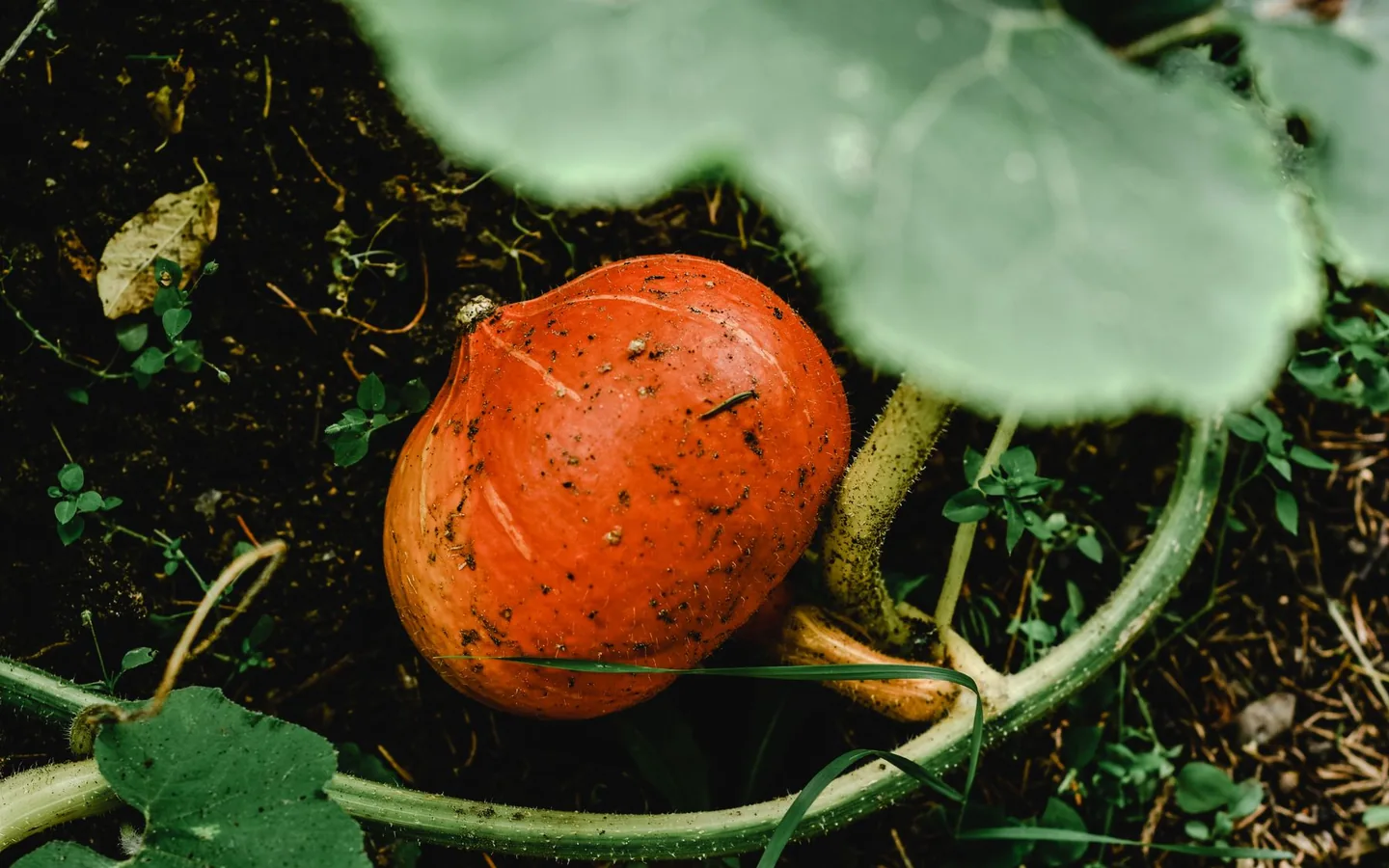
A pumpkin plant can take over a surprising amount of garden. One seedling that fits in a small pot in May may send stems metres across the ground by August.
The recipe for a successful UK crop is an early enough start, frost-free planting, plenty of fertile root space and enough warm weather to ripen the fruit before autumn.
A decorative pumpkin for October and a small winter squash for the kitchen are grown in similar ways, but their size, flavour and storage life can differ greatly.
Choose the right pumpkin variety
| Type | Why grow it? | Space to allow |
|---|---|---|
| Small culinary pumpkin | Useful for soups and roasting | Check trailing or bush habit |
| Traditional carving pumpkin | Large decorative October fruit | Often vigorous |
| Compact bush variety | Better for small beds or large pots | Still often at least 90cm across |
| Giant exhibition pumpkin | Very large potential fruit | Substantial area and intensive care |
| Trailing winter squash | Good flavour and storage, variety-dependent | Often long spreading stems |
Check the actual variety's days to maturity, disease resistance and mature width. A giant pumpkin isn't a sensible choice for a two-metre raised bed.
When should you sow pumpkins in the UK?
Pumpkins are tender. The RHS recommends starting indoors in April, sometimes into early May, to give the plants a long growing season.
Plant out after local frost risk has passed and the soil is warm, often late May or early June.
Starting seeds in February without enough light and growing-on space can produce tangled weak plants.
Direct outdoor sowing is possible in sufficiently warm late spring soil, but the harvest season may be shorter, especially in northern areas.
What temperature do pumpkin seeds need?
Seeds generally germinate best in warm conditions, around 18–21°C, though the specific packet may advise differently.
A heated propagator is useful in a cold house, but remove seedlings from excessive warmth and humidity as soon as they emerge.
Pumpkins need good light once growing, not just temperature.
Don't place sealed seed pots in blazing direct sunlight where the compost can overheat.
Sowing pumpkins step by step
- Fill individual pots with a suitable peat-free seed compost.
- Moisten the compost so it is evenly damp.
- Sow one seed about 2–3cm deep, according to the seed packet.
- Label the cultivar and date.
- Keep warm until seedlings emerge.
- Give young plants bright light and adequate space.
- Pot on only if necessary, taking care not to disturb their roots.
- Harden off gradually before outdoor planting.
Seeds are large and easy to handle, which makes pumpkins good crops for children to sow under supervision.
Choose a warm garden position
Pumpkins favour full sun, shelter from cold wind and fertile soil that retains moisture but drains well.
An exposed shady plot can struggle to ripen large fruit during a cool British summer.
Avoid a low area that floods after rain. Root systems need oxygen even when plants are thirsty.
Before planting, clear persistent weeds and work suitable mature organic matter into the growing area.
How much space does a pumpkin need?
The RHS advises a minimum spacing around 90cm for bush plants and 1.5m for trailing types.
Many mature vines spread beyond that, so use the stated dimensions as a minimum starting point, not a promise that the plant will remain neatly within a circle.
Don't put three vigorous trailing plants into one small raised bed.
For an initial plan, use our plant spacing calculator and then allow the cultivar's actual spread.
Planting out in the garden
Wait until frost is no longer forecast and nights are reliably mild.
Water seedlings before removing them from pots. Make a hole large enough for the root ball and place the plant at about its original depth.
Firm gently and water thoroughly to settle soil around roots.
Mulch once ground is moist, leaving the base of stems clear.
Our hardening-off guide explains how to protect indoor-raised leaves from sudden sun and wind.
Can pumpkins grow in containers?
Compact varieties can grow in very large containers or growing bags with appropriate support and water.
Choose a stable heavy container, reliable drainage and enough growing medium for a vigorous plant.
Don't use a small patio pot for a giant trailing variety. Container roots dry quickly during summer, and fruiting vines need steady water.
Our compost for pots and containers guide covers drainage and medium selection.
Watering during summer
Pumpkins develop large foliage and need ample moisture while stems and fruit are growing.
Water at the root zone, checking the soil beneath the surface.
Deep watering when needed is more useful than repeatedly splashing leaves and paths.
Avoid allowing the root zone to become bone dry for days, then drowning it.
A suitable mulch over moist soil can help reduce evaporation.
Feeding pumpkin plants
A fertile bed containing mature organic matter is a good starting point.
For hungry growing plants, a suitable fertiliser may help, especially when fruits begin developing, but follow labelled application rates.
Excessive nitrogen can encourage vigorous foliage at the expense of balanced cropping.
A giant exhibition pumpkin may have different nutrient management needs from an ordinary kitchen squash.
Male and female pumpkin flowers
Pumpkins usually produce separate male and female flowers on the same plant.
Female flowers have a miniature fruit beneath the petals, whereas male flowers grow on a simpler stalk.
Pollen must usually be transferred to female flowers by insects or hand pollination.
Early flowers are often predominantly male, so don't assume the plant is defective when the first flowers don't form pumpkins.
How to hand-pollinate a pumpkin
During a morning when fresh flowers are open, select a male and female bloom.
Use a clean soft brush to transfer pollen from the male anthers onto the female stigma, or carefully use a freshly opened male flower.
Avoid damaging the female flower or tiny fruit.
Successful pollination is followed by continued fruit enlargement. A failed fruitlet may yellow and shrink.
Grow nectar plants nearby and avoid unnecessary insecticide spraying during flowering.
Why a pumpkin starts to rot when tiny
Early failed fruitlets often result from poor pollination, cool weather or a plant too small to sustain fruit.
If a large developed pumpkin develops a soft rotting patch where it contacts wet ground, that's a different issue.
Check whether the fruit is touching waterlogged soil, has physical damage or has developing mould.
Remove severely decayed fruit and address the local conditions rather than using an untested spray.
Should you train pumpkin vines?
If space is available, allow trailing varieties to spread along the soil.
Where needed, guide flexible new shoots around an allotted area using short supports, but don't bend older rigid stems sharply.
Small-fruited pumpkins can sometimes be grown on very strong arches or trellises.
Large pumpkins are generally safer on the ground. Fruit weight can damage ordinary garden netting or flimsy supports.
How many pumpkins should you leave per plant?
It depends on variety and your intended crop size.
A vigorous plant may support several small fruits, while gardeners aiming for one exceptionally large pumpkin often reduce competing fruit numbers.
For ordinary cooking, don't remove healthy young pumpkins without good reason.
An early small-fruited cultivar may produce a more reliable crop in a short UK summer than an ambitious giant type.
When are pumpkins ready to harvest?
Look for full cultivar colour, a hard mature skin and a drying or corky stem.
Pumpkins usually mature during autumn. The RHS advises harvesting before the first frost because frosted fruits store poorly.
Use clean secateurs or a knife, keeping at least 10cm of stalk attached.
Don't carry a pumpkin by its stem; it can tear away and leave a vulnerable wound.
Curing pumpkins for storage
Sound fully mature pumpkins benefit from a warm, airy curing period to harden their skins.
The RHS recommends around a week to ten days in sunshine or an appropriately ventilated greenhouse or cold frame, with protection against frost.
Move cured fruit into a ventilated store around 10–15°C, with fruits separated so decay cannot spread easily.
Keeping quality varies greatly by cultivar; damaged pumpkins should be used promptly rather than stored for months.
What about pumpkin diseases?
Powdery mildew often develops on ageing foliage late in summer.
A little mildew near harvest may not ruin sound mature fruit, but widespread early disease can reduce photosynthesis.
Inspect for squash vine damage, root rot and slugs as appropriate.
Don't confuse ordinary older leaves dying in autumn with a new severe infection requiring blanket treatment.
Common pumpkin mistakes
- Sowing too early and keeping weak sprawling plants indoors for months.
- Planting outdoors before frost risk ends.
- Choosing a giant variety for a tiny container.
- Removing all male flowers needed for pollination.
- Letting young plants dry completely in summer.
- Cutting off the harvest stem flush with the fruit.
- Leaving mature pumpkins outside through damaging frost.
Can I grow pumpkins outdoors in northern England?
Yes, especially early-maturing varieties in sunny sheltered locations, but cool summers can reduce crop size and delay ripening.
Can pumpkins grow vertically?
Small-fruited suitable varieties can be trained up very strong supports. Large pumpkins usually need ground support.
Can you eat carving pumpkins?
Many are edible if sound, but flavour and texture are often less impressive than culinary cultivars.
For watering a large pumpkin patch efficiently, our irrigation planning guide gives practical options.