
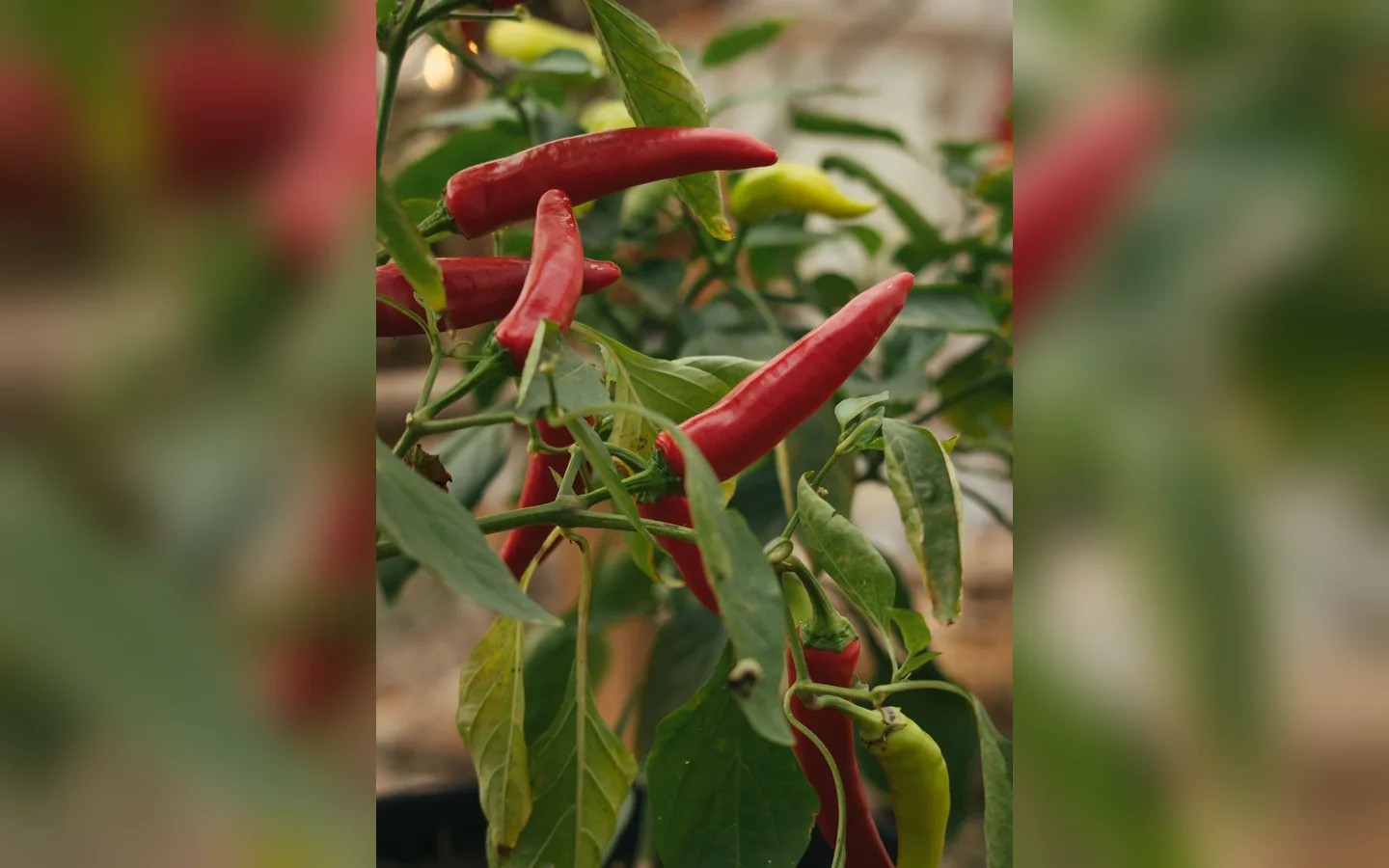
Sweet peppers and chillies are attractive container plants, but they need more warmth than many vegetables. A sunny patio pot may produce plenty in a good UK summer; a shaded, exposed balcony might struggle to ripen fruit before autumn.
The practical formula is a warm position, enough root volume, good drainage and careful watering. You don't need an elaborate hydroponic system, but a tiny ornamental pot will limit a vigorous pepper plant.
Sweet peppers or chillies?
Both belong to the genus Capsicum, but cultivars vary greatly in mature size, fruit heat and time to harvest.
| Type | Useful container approach | Consideration |
|---|---|---|
| Compact sweet bell pepper | Medium to large stable pot | Needs warmth to ripen full-sized fruit |
| Small sweet snacking pepper | Large patio pot | Often easier to harvest over a long period |
| Compact C. annuum chilli | Patio pot or sunny greenhouse | Wide range of heat levels |
| Slow-growing superhot chilli | Protected container with long season | Needs extended warmth and strong light |
| Ornamental chilli | Pot suited to mature roots | Fruit may be very hot even if decorative |
Buy a named cultivar and check its eventual size. “Chilli” alone doesn't tell you how large a pot or how long a season it needs.
What size pot do peppers need?
A small seedling starts best in a modest pot; as roots develop, move it into a larger container.
For many compact peppers, a final pot around 5–10 litres or more can work, with vigorous plants benefiting from a larger volume.
The RHS describes using two- or three-litre pots as an intermediate stage before final positioning for some greenhouse peppers and chillies.
A huge pot isn't automatically better for a tiny seedling if compost stays cold and wet for weeks.
Which compost is best?
Choose a reputable peat-free multipurpose potting compost that retains moisture while allowing surplus water to drain.
A modest amount of appropriate perlite or grit may improve aeration in some formulations, but don't turn the pot into a bucket of coarse stones.
Keep drainage holes open. Roots can rot when water sits permanently in the bottom.
Our compost for pots and containers guide explains how media differ.
Start seedlings before the warm season
Peppers are usually sown indoors during late winter or early spring.
Sweet peppers commonly germinate around 18–21°C, with some chillies preferring warmer conditions. Check the seed packet.
As soon as seedlings emerge, provide bright light. A warm dark windowsill produces weak growth even when germination succeeds.
Our when to start seeds indoors guide helps plan suitable space for young plants.
Potting on without damaging roots
- Water the seedling lightly before moving it.
- Select a pot just one stage larger than the current root ball.
- Add fresh suitable peat-free growing medium.
- Lift the plant carefully by leaves or root ball rather than pulling the stem.
- Set it at approximately its previous growing depth.
- Firm gently around the roots.
- Water to settle compost while allowing drainage.
- Keep in warm bright conditions as new roots establish.
If roots are severely spiralling in the pot, loosen them gently without tearing them apart.
Where should you keep pepper pots?
A greenhouse, polytunnel or bright conservatory generally gives the most reliable warmth for UK peppers.
A sunny sheltered outdoor patio can work in mild areas after the last frost, but night temperatures matter more than how sunny lunchtime feels.
The RHS recommends waiting until outdoor nights are reliably around 12°C or above for chillies, often late May to early June.
Harden protected plants off gradually before moving them outside permanently.
How to prevent pots getting too hot
A black container on dark paving in direct summer sun may develop very high root temperatures.
Consider a lighter pot, a cooler base or some afternoon protection during an extreme heatwave.
Don't move sun-loving peppers into permanent deep shade, where they may struggle to flower or ripen.
Avoid shutting the greenhouse entirely on hot days. Ventilation matters as much as water.
How much should peppers be watered?
Check the root zone before watering. The top layer may feel dry while the compost below is still moist.
Water thoroughly when the pot begins to need it, then let surplus drain away.
Repeated severe drought can stress flowering and fruit development. Constant saturation is equally unhelpful.
If a plant wilts at noon, inspect deeper moisture rather than immediately applying another full watering can.
Feed according to crop stage
Container compost's starter nutrients can run down as the plants grow.
Use an appropriate tomato or pepper feed during flowering and fruiting at the product's recommended dilution and interval.
Overfeeding with nitrogen can produce lush leaves but few fruits.
Don't feed heavily just because a slow-growing chilli hasn't ripened during a cold cloudy fortnight; it may need warmth and time, not more nutrients.
Flowers and pollination
Pepper flowers are usually self-fertile, although insects and a gentle movement of flowers may improve pollen transfer under some conditions.
You generally don't need to move male pollen from one plant to another in the same way as some cucumbers.
Very hot or cold conditions can cause flowers to drop before fruit develops.
Improve temperature management first rather than making major cuts to a healthy plant.
Should you pinch out the growing tips?
Many chillies branch naturally. RHS experience suggests pinching out tips is rarely necessary for numerous cultivars.
Some tall varieties benefit from support or careful shaping, but indiscriminate cutting delays flowering and can reduce the early crop.
If a plant has naturally formed a forked main stem, don't remove half of it simply because a generic video says every pepper needs pruning.
Choose training around the actual plant and fruit load.
Supporting fruit-heavy plants
As peppers swell, branches may bend or snap.
Insert a small cane and use soft loose ties where necessary. A strong wind can topple a heavy patio pot even if the stems are well supported.
Avoid sharp wire ties that cut into developing stems.
If growing an especially tall cultivar, plan support before the roots fill the final container.
When are peppers ready to pick?
Some sweet peppers can be harvested green; their flavour often becomes sweeter as they ripen red, yellow or orange.
Chillies also change colour with maturity according to variety, but a green fruit may already be hot.
Cut with a sharp tool rather than yanking and breaking the stem.
Ripening slows as autumn temperatures drop. Move suitable containers into a warm protected place before frost rather than expecting an outdoor plant to finish in November.
Leaf yellowing and poor fruit set
Yellow leaves may reflect old age, root stress, nutrient shortage or problems with compost pH.
If a plant has abundant leaves but no fruit, check light, heat and excess nitrogen.
Where fruit falls off while tiny, review temperature changes and moisture before adding fertiliser.
Don't spray every discoloured leaf with an untested household treatment.
Can you overwinter a potted chilli?
Some healthy chilli plants can survive several years with suitable frost-free winter care.
This requires much less watering while growth slows and enough light to keep the plant healthy.
Our overwintering chilli plants guide covers the separate winter routine.
Sweet peppers are often grown as annuals in UK gardens, but overwintering is possible in suitable conditions.
Common mistakes with pepper containers
- Using a tiny pot for a tall fruit-heavy variety.
- Placing pots outside before nights are warm enough.
- Letting compost sit permanently waterlogged.
- Keeping early seedlings hot but poorly lit.
- Pinching out healthy tips without cultivar-specific reason.
- Applying excessive high-nitrogen fertiliser.
- Expecting long-season hot chillies to ripen outdoors during a cool short summer.
Can I grow bell peppers outdoors in pots in the UK?
Yes, especially in warm sheltered sites with an early cultivar, although greenhouse conditions are usually more reliable.
How big should a chilli pot be?
The right size depends on cultivar and plant stage. Many compact varieties do well in around 5–10 litres or more, with vigorous plants needing larger volumes.
Do pepper plants need full sun?
They generally need abundant light and warmth, but container roots should be protected from extreme heat and severe drying.