
A greenhouse gives you useful extra weeks at each end of the growing season, but the right job changes enormously between January and July. A calendar is most useful when it tells you what to do next, not when it promises that every crop will succeed in every UK postcode.
This schedule assumes an unheated domestic greenhouse in Britain. Mild coastal gardens, exposed northern sites and heated houses may need significantly different timing.
How to use this greenhouse calendar
Use the months as planning windows, not rigid planting deadlines.
Check nighttime temperatures and daylight before sowing tender crops. A greenhouse that feels hot at noon can still be below freezing by dawn.
Tender tomatoes and cucumbers should only move into an unheated house when their growing conditions are safe. Hardy salad crops can tolerate much cooler conditions.
The monthly plan below focuses on sowing, planting, cropping and practical maintenance. For a detailed list of winter crop choices, use our unheated greenhouse in winter guide.
January: plan and inspect
Most unheated greenhouses are cold and growing is slow.
Check door seals, glazing, vents and gutters, and clear broken pots and decaying material.
Ventilate briefly in suitable mild weather to reduce persistent condensation, but avoid chilling tender overwintering plants.
Plan seed orders and crop space. Some hardy winter salads may still be harvested, though they won't grow rapidly in low light.
Don't sow every summer crop in January unless you have genuinely suitable heat and grow lights.
February: prepare for propagation
Clean pots, trays and staging, and check your seed compost supply.
Under appropriate indoor warmth, you may begin certain slow-growing crops such as chillies, but an unheated greenhouse is often too cold for reliable germination.
A thermometer that records minimum temperatures is invaluable for discovering how cold the greenhouse really becomes at night.
Avoid working waterlogged greenhouse soil and keep paths clear.
March: hardy seedlings and careful ventilation
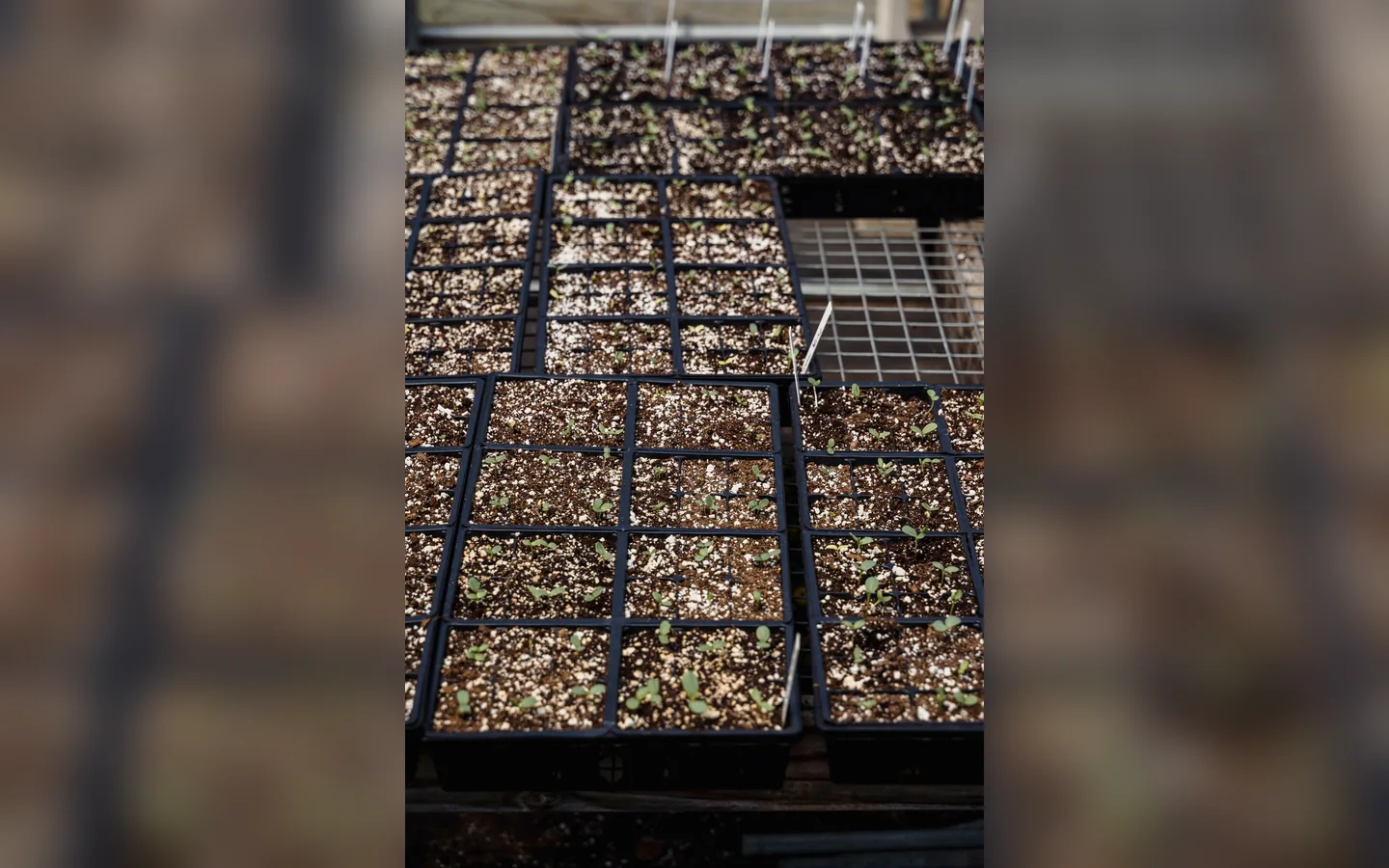
As day length increases, the greenhouse becomes more useful for protected sowing of suitable hardy vegetables and flowers.
Watch midday temperatures: a sunny March afternoon can overheat small structures even when nights remain frosty.
Start tender tomatoes under suitable protected conditions rather than assuming the greenhouse is warm enough all night.
If young seedlings are moving towards outdoor conditions, follow our hardening-off guide to reduce shock.
April: the growing season accelerates
Continue raising suitable hardy seedlings and pot on those that have filled their modules.
Tomato seedlings may need larger pots and strong light. Cucumber seeds can be started indoors under sufficiently warm conditions for summer greenhouse planting.
Check roof vents and automatic openers before the first warm spell catches you out.
Position supports for tall crops early rather than trying to insert canes through established roots later.
May: move tender crops when safe
In many areas, May is when greenhouse tomatoes begin moving into final containers or borders, provided nighttime conditions are suitable.
Cucumbers demand more warmth and are best planted only after the cold risk has passed.
Water new plants carefully and protect them from fierce midday sun if they were previously grown indoors.
Keep space for mature foliage. A greenhouse that looks empty after planting can be crowded by July.
June: train, water and begin cropping
Tomatoes extend rapidly and need tying to supports. For cordon varieties, remove appropriate side shoots according to the plant's training habit.
Train greenhouse cucumbers vertically and manage flower types as instructed for the cultivar.
Open doors and vents before temperatures build. If ventilation isn't enough, use appropriate shading.
Feed container fruiting crops at labelled rates as they begin to crop.
July: watch the heat and harvest frequently
This is often a busy month: tomatoes begin ripening and cucumbers may need picking every few days.
Check watering every day during hot weather. Container compost can dry rapidly, particularly at the sides of a greenhouse.
Use ventilation and adjustable shading to avoid prolonged high temperatures. Inspect leaves for red spider mites, whitefly and disease symptoms.
Don't leave oversized cucumbers on the vine, which can reduce further production.
August: maintain crops and think ahead
Harvest tomatoes, cucumbers and other summer produce while keeping plants trained and well watered.
Remove failing or diseased foliage appropriately and avoid allowing vines to block the vents.
Consider sowing suitable hardy autumn salads where space will become available. Match timing to remaining light and frost risk.
Watch for pest populations that build quickly during hot dry spells.
September: reduce shading and begin clear-up
As light levels fall, gradually remove seasonal shading that is no longer needed.
Tomatoes may keep cropping in favourable conditions, but reduced light and cooler nights slow ripening.
Start clearing finished summer crops and wash empty pots and supports.
This can be a useful time to plant or sow suitable cool-season crops in prepared sections, with realistic expectations for autumn growth.
October: harvest remaining crops
Use the last of suitable tomatoes and remove exhausted cucumber vines.
Collect fallen fruit and leaves so they don't harbour pests or disease.
Check vents, door latches and any cold protection systems before winter weather arrives.
Do not leave unhealthy crop remains to rot beneath staging.
November: clean and prepare
A mostly empty greenhouse is easier to wash and inspect.
Remove debris, clean glazing and clear gutters to maximise the limited winter light.
Check any winter salads or other hardy crops and keep them ventilated on mild days where possible.
Our greenhouse ventilation in winter guide helps manage condensation without simply sealing everything shut.
December: protect, harvest and maintain
Growth is slow, but you may still harvest hardy leaves or overwinter suitable plants depending on their cold tolerance.
Check for storm damage, blocked gutters and waterlogging after heavy rain.
Avoid overwatering during short cold days. Monitor the root zone and the actual condition of any plants remaining inside.
Use the quiet period to review what occupied too much space and which crops were worth growing next year.
Quick annual overview
| Season | Main greenhouse priority |
|---|---|
| Winter | Maintenance, frost awareness and modest hardy crops |
| Spring | Propagation, potting on and temperature monitoring |
| Early summer | Planting tender crops and training supports |
| High summer | Harvesting, watering, shade and pest checks |
| Autumn | Final cropping, cool-season sowing and clear-up |
What changes in a heated greenhouse?
A heated house may support earlier propagation and a longer tender-crop season, but light remains limiting in winter.
Heat alone will not make a January greenhouse behave like June. Some crops may need supplementary light, and heating costs can exceed the value of a small harvest.
If you're considering low-energy protection, see how to heat a greenhouse without electricity for the realistic limits of passive measures.
Tips for a small greenhouse
Plan in terms of mature plants, not seed packets. One trained cucumber may occupy more leaf area than expected.
Move seed trays out promptly when conditions allow and free staging for later tasks.
Keep the door, water source and growing containers accessible. For planning container volume, our pot compost calculator can help.
Calendar mistakes to avoid
- Treating month labels as fixed frost dates.
- Sowing tender seeds in cold unheated compost.
- Keeping shade netting over tomatoes through a dull autumn.
- Leaving summer crops in place after they have finished.
- Watering by a rigid timetable regardless of weather.
- Forgetting a greenhouse needs ventilation in winter as well as summer.
What can I plant in an unheated greenhouse in March?
Suitable hardy seedlings and some early protected salad crops may work, depending on nighttime temperatures. Warm-season vegetables often still need indoor propagation.
When can tomatoes go into a greenhouse?
When the greenhouse can maintain appropriate warmth and frost danger has passed for tender young plants, often from late spring.
Can a greenhouse produce food in December?
Some hardy crops can overwinter or provide limited harvesting, but growth is slow in low winter light.