
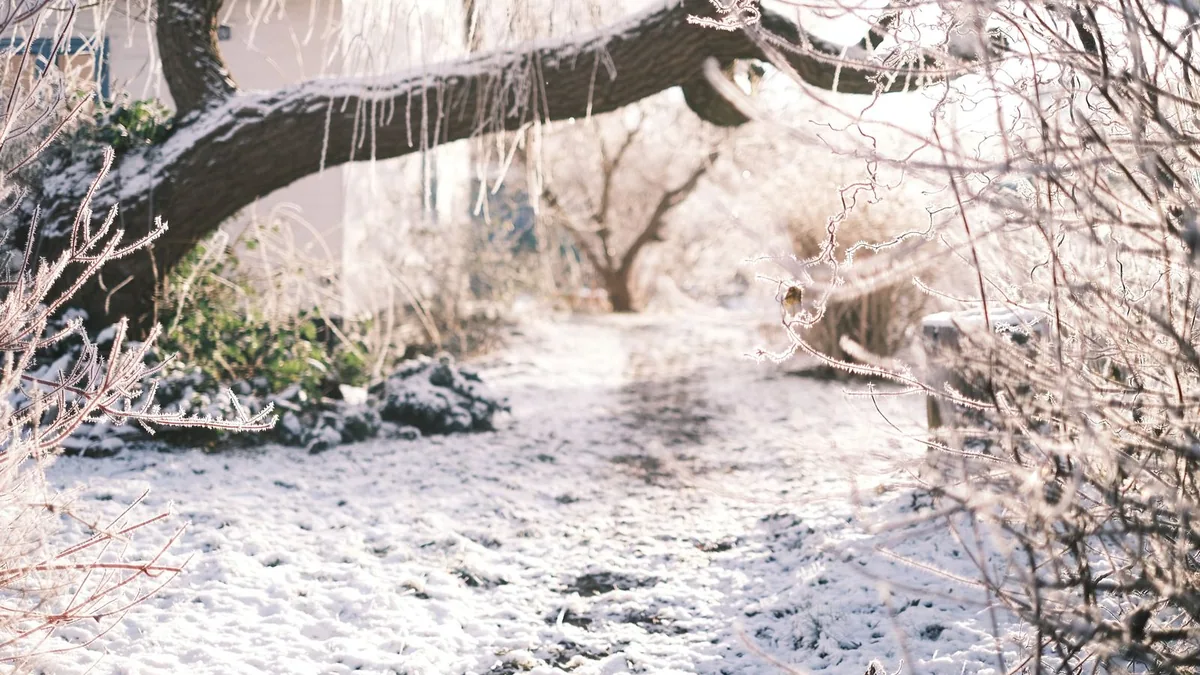
December can feel like the month when the garden closes for business. In practice, there are a few useful jobs worth doing, plenty that can wait, and several that are better left alone.
The deciding factor is the condition of the garden, not the date. A dry, mild December afternoon can be ideal for planting a bare-root fruit tree. The same job in frozen ground or sticky, saturated clay is more likely to damage the soil than help the tree.
If you have an hour to spare, concentrate on protecting vulnerable plants, checking winter crops and dealing with anything unsafe. Pruning and planting come next when the weather gives you a suitable window.
December garden jobs at a glance
| Job | When to do it | When to leave it |
|---|---|---|
| Plant bare-root roses, hedging and fruit trees | Soil is workable and drains reasonably | Ground is frozen or waterlogged |
| Prune established apple and pear trees | Dry, frost-free weather while dormant | During severe frost; don't winter-prune plums or cherries |
| Protect tender pots and plants | Before an exposed cold spell | Don't keep plants sealed under covers in mild weather |
| Remove fallen leaves from lawns and paths | Whenever they are smothering grass or creating slips | Leaves tucked into borders can stay for wildlife |
| Maintain winter vegetables | Check weekly for damage, pests and support | Don't walk across soggy beds |
| Top-dress empty beds with compost | When the soil isn't saturated | No need to dig wet soil |
| Check greenhouses, cold frames and supports | On a dry day, especially before storms | Don't leave structures sealed up every mild day |
| Sow seeds | Only a few suitable crops and protected methods | Most outdoor sowing can wait |
Plant bare-root trees, shrubs and roses
December is an excellent part of the dormant planting season for bare-root plants. They usually arrive without a pot, with the roots wrapped or packed to prevent drying.
You can plant bare-root roses, deciduous hedging, apple and pear trees, currants and raspberry canes when the ground is suitable.
First, look at the site. If a planting hole fills with standing water, don't push ahead. Keep newly delivered plants' roots protected from drying and follow the supplier's short-term storage instructions until conditions improve.
When planting:
- Clear grass and weeds from the immediate planting area.
- Dig a hole wide enough for the roots to spread naturally without being bent back on themselves.
- Set the plant at the correct depth. For grafted fruit trees, keep the graft union above soil level; bare-root roses have their own planting-depth guidance.
- Backfill with the original soil, firm gently and water in as needed.
- Mulch around the plant, leaving a gap at the trunk or stems so moisture isn't held against the bark.
A newly planted tree also needs suitable support if the site or rootstock requires it. Don't tie it so tightly that the trunk rubs against the stake.
For roses, use our bare-root rose planting guide.
Prune apples and pears — not every fruit tree
Dormant apple and pear trees can be pruned during winter. Start with dead, damaged and crossing branches. Then look for congested growth that blocks light and air from the centre of the tree.
The aim is a productive framework, not a severe haircut. Removing too much wood can encourage vigorous, upright shoots and delay fruiting.
Use clean, sharp tools, make cuts just outside the branch collar and avoid leaving stubs. On established trees, work gradually rather than stripping out a large proportion of the crown in one session.
Do not apply this December advice to plums, cherries or other stone fruit. Winter pruning increases the risk of diseases such as silver leaf; those trees generally have different, warmer-season pruning windows.
Young trained trees, espaliers and cordons may also require a different approach from an established bush or standard tree.
Read when to prune apple trees or when to prune pear trees before cutting.
Deal with frost-sensitive pots before the cold arrives
Container plants are more exposed to freezing temperatures because cold reaches their roots from the sides of the pot as well as from above.
Move vulnerable containers into a sheltered position, ideally out of persistent wind and winter rain. Raise pots off the ground on feet if necessary to keep drainage holes clear.
Wrap the container rather than smothering evergreen foliage for weeks on end. Use horticultural fleece over vulnerable top growth when frost is forecast, then uncover or ventilate when conditions improve.
Tropical plants, tender pelargoniums and overwintering chillies often require more protection than a hardy perennial in a border. Check the plant's actual hardiness rather than assuming that every pot needs the same treatment.
If the compost is already soaking wet, the first priority may be shelter from rain rather than extra watering.
See protecting pots from frost and our frost protection guide.
Check brassicas, leeks and other crops still standing
A winter vegetable plot isn't necessarily empty. December can bring harvests of Brussels sprouts, kale, cabbages, leeks, parsnips and other crops sown much earlier in the year.
Check tall Brussels sprout plants after windy weather. Firm loose soil around the base and stake plants that rock noticeably. Remove yellowing or rotting leaves, especially where they are packed against the stems.
Pigeons can strip exposed brassicas surprisingly quickly. Check that protective structures are secure and that any netting is properly tensioned, with no loose sections likely to entangle wildlife.
For roots left in the ground, consider a mulch or temporary cover that keeps the soil accessible during a freeze. Never assume a vegetable is ready to sow in December simply because it can be harvested then.
If you want to start something new, our December sowing and planting guide separates realistic options from crops that need to wait.
Improve bare beds without digging wet soil
If an empty bed is reasonably firm underfoot, spread a layer of mature compost or well-rotted organic matter over the surface. Worms and soil organisms can incorporate it gradually.
Avoid turning heavy, wet clay into lumps in December. Working soil when it is waterlogged destroys its structure; those compacted clods can remain a nuisance well into spring.
A layer of organic mulch also reduces exposure to driving rain. Keep it away from the crowns of plants that dislike wet conditions and from woody stems where it might encourage rot.
There is no requirement to make every vegetable bed look newly dug before Christmas. Sometimes the best thing you can do for the soil is stay off it.
Our spring soil preparation guide explains when to do more.
Keep the lawn clear, but don't force lawn repairs
Rake or lift thick patches of fallen leaves from grass before they form a wet blanket. Light leaf litter under shrubs and in borders can stay where it benefits the soil and wildlife.
If grass is still growing in a mild spell, a light mow may be appropriate. Only mow when the grass is reasonably dry, the ground is firm and frost has cleared. Use a higher cut than in summer rather than scalping the lawn.
Don't repeatedly walk across wet turf to tidy it. Foot traffic on saturated ground can create ruts and compaction that last longer than the fallen leaves would have.
Bare patch reseeding generally belongs in warmer conditions, when germination is much more reliable. If the lawn is already boggy, our muddy winter lawn guide deals with the underlying drainage and compaction issues.
Open up the greenhouse on suitable days
A cold greenhouse protects plants from wind and heavy rain, but it doesn't automatically give them warm growing weather. December brings limited daylight, damp air and condensation.
Check plants for mould and yellowing leaves. Remove decaying material promptly and leave space between pots so air can circulate.
On milder, dry days, open a vent or door briefly if conditions allow. Close it before temperatures drop. Don't water by habit: feel the compost first, because plants may be using very little moisture.
Check that the glazing, roof panels, staging and door fastenings are secure before winter storms.
For growing and storage options, see what to grow in an unheated greenhouse and winter greenhouse ventilation.
Keep an eye on paths, trees and garden structures
A slippery path deserves attention sooner than a border of untidy perennials. Clear algae and leaf build-up using a method suitable for the paving.
Inspect fences, loose trellis, old tree supports and anything likely to blow over in a gale. Check gutters and drains for blockages. Drain vulnerable outdoor watering lines and protect external taps if severe frost is expected.
Avoid climbing ladders or tackling major tree work in wind or icy conditions. Large or damaged trees close to buildings are a job for a qualified professional.
Leave some garden tidying until spring
Not every brown stem needs cutting down. Hollow stems, seedheads, leaf piles and sheltered corners provide habitat for overwintering insects and food or cover for birds.
You can remove plants that are diseased, collapsed across paths or genuinely in the way, while leaving sound standing stems elsewhere.
Winter-flowering shrubs and perennials also make the garden less empty. If you'd like useful colour without constant maintenance, start with our winter-flowering shrubs and winter-flowering perennials guides.
What jobs should you avoid in December?
Avoid heavy digging on wet ground, sowing most vegetables outdoors into cold soil, cutting frost-damaged growth back too early, and pruning every shrub simply because it has lost its leaves.
Spring-flowering shrubs often carry the buds for next year's flowers on older growth. Cut them hard in December and you may remove the display before it happens.
And don't rush to replace every plant that looks damaged after one cold night. Some will recover when warmer weather returns; see can plants recover from frost damage?.
If you only have half an hour
Check that tall crops and pots are secure, clear dangerous wet leaves from paths, inspect greenhouse plants and pick any vegetables that are ready.
After that, wait for a decent day to tackle planting or pruning. December gardening is mostly about making good decisions between spells of bad weather.