
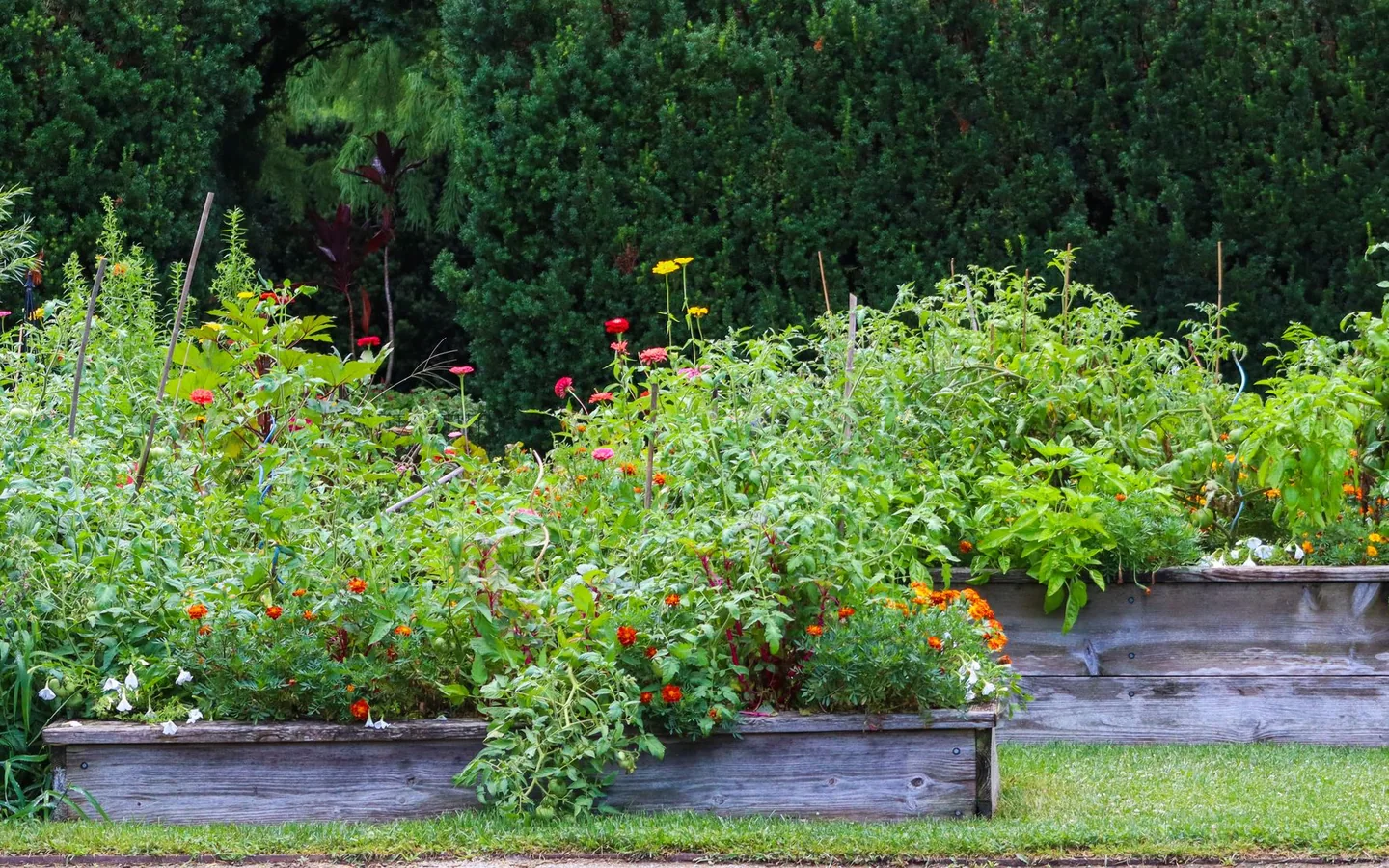
August is the month when some plants are at their best and others are plainly exhausted. Bean plants can still be cropping heavily, hanging baskets need attention and the first autumn jobs begin to make sense.
Harvest regularly, protect plants that still need moisture and make room for the next season. It's a useful month for maintenance rather than rushing into heavy winter pruning or redesigning the whole garden.
The most important jobs this month
| Garden area | August priority | What to avoid |
|---|---|---|
| Vegetable plot | Pick beans, courgettes and other crops regularly | Allowing mature produce to suppress further cropping |
| Trained apples and pears | Complete suitable late-summer pruning | Applying espalier rules to free-standing trees |
| Fruit beds | Lift rooted strawberry runners | Detaching unrooted runners too early |
| Flower borders | Deadhead repeat-flowering plants | Cutting flowers wanted for seed |
| Containers | Check moisture and food supply | Watering already saturated compost |
| Greenhouse | Ventilate and monitor tomato health | Leaving humid foliage crowded |
| Bare vegetable soil | Consider suitable green manure | Letting weeds seed on unused ground |
| Pond | Check water levels and wildlife access | Draining established ponds unnecessarily |
August isn't a fixed date for every job. A wet cool spell changes what needs watering, while a dry windy week makes young planting a priority.
Pick summer vegetables often
Harvest runner beans and French beans while the pods are still tender. Regular picking helps maintain productivity.
Lift suitable early and second-early potatoes once the crop is ready, and clear spent plants that no longer contribute to a harvest.
Courgettes can expand remarkably quickly in warm weather. Pick them at a useful size instead of allowing several plants to make enormous marrows.
Keep a note of which crops were productive and which varieties struggled. That will help when selecting seed for next year.
Harvest and store fruit sensibly
Apples and pears mature at different times by variety. Don't strip an entire tree because one exposed fruit has coloured.
For apples, check whether fruit comes away with a gentle lift and twist, then assess flavour and maturity. Handle storage varieties without bruising them.
Pick soft fruit frequently rather than leaving overripe berries on canes. Remove spoiled fallen fruit where appropriate to discourage pests.
Check young tree ties and supports, especially where branches are carrying a heavy crop.
Summer-prune trained apples and pears
Late August is often suitable for shortening new lateral growth on cordons and espaliers once the shoot bases have matured.
The RHS advises keeping the permanent trained framework while cutting suitable side shoots back to a small number of leaves. Free-standing apple and pear trees usually receive their main structural prune in winter instead.
Avoid indiscriminate pruning in hot sunshine, which can expose previously shaded fruit to scorch.
Our when to prune apple trees guide explains the difference between trained and ordinary tree management.
Strawberry runners: choose your replacements
Healthy strawberry plants often produce runners bearing small plantlets during summer.
Pin suitable strong runners into small pots or prepared soil while they remain attached to the parent until roots develop.
Once rooted and growing, the new plant can be separated and moved to a suitable bed.
Don't propagate from unhealthy or virus-affected plants. A vigorous-looking runner from a diseased parent doesn't magically become disease-free.
Deadhead, but leave some seedheads
Repeat-flowering roses, dahlias and many bedding plants can continue flowering if faded blooms are removed appropriately.
However, seedheads of teasels, echinops and other plants can provide autumn structure and wildlife value. Decide which to leave.
Do not cut all perennials to the ground in August. Many still need their leaves to build reserves for the next season.
A selective deadhead is usually a better job than a wholesale tidy-up.
Water the vulnerable plants first
Newly planted shrubs, trees, vegetables in containers and hanging baskets have smaller accessible water reserves.
Check moisture at root depth. A brief surface shower may not replace moisture lost through weeks of warm weather.
Established lawns can go dormant during drought and often recover after rain. You may achieve more by saving a young fruit tree than irrigating a lawn for appearance.
Our garden irrigation planning guide helps prioritise water without simply increasing consumption.
Check greenhouse ventilation and tomatoes
August greenhouse temperatures can still climb rapidly during sunshine.
Ventilate as needed, inspect for pests and remove genuinely infected leaves carefully. Keep tomato plants supported and follow the pruning method suited to bush or cordon habits.
If tomato leaves develop rapidly spreading water-soaked dark lesions after humid weather, investigate late blight promptly.
Don't assume every yellow lower leaf is a disease or apply household sprays without identifying the cause.
Sow suitable follow-on crops
In milder areas, you may still sow fast-maturing salad crops, some spring cabbage, mizuna, mibuna, turnips or autumn greens if the variety and weather permit.
Many winter crops need to have been started earlier. Check packet dates rather than assuming an August sowing will produce full-sized Brussels sprouts before Christmas.
Use a fine prepared bed and keep the seed zone moist during germination.
The plant spacing guide helps avoid overfilling space with late summer transplants.
Green manures for an empty plot
A suitable green manure can protect soil after summer crops finish and help retain nutrients.
Choose seed according to the next crop, time available and whether the cover needs to survive winter.
Mustard belongs to the brassica family, so consider rotations if a bed has suffered clubroot.
Do not allow green manure plants to form mature seed unless self-seeding is part of your plan.
Take cuttings while material is healthy
August can be useful for cuttings from suitable semi-ripe shrubs and some tender perennials.
Choose healthy non-flowering growth as directed for the species, use clean equipment and keep the rooting compost moist but not waterlogged.
Label each variety clearly. A bag of unlabelled cuttings may be impossible to identify after leaves fall.
Our lavender cuttings guide provides a practical example of the method.
Lawn care in a dry August
Raise mowing height or stop mowing during drought to avoid stressing dry turf.
If rainfall returns and grass begins growing again, resume cuts gradually rather than scalping long grass in a single pass.
For major reseeding or turf work, early autumn often provides a better establishment window than hot midsummer.
Do not feed a drought-dormant lawn in the hope of forcing bright green growth overnight.
Ponds and wildlife
Water levels can drop in prolonged heat. Use suitable stored rainwater for top-ups where possible and avoid sudden large changes to water chemistry.
Check that hedgehogs and other animals can escape water features safely.
Leave some standing vegetation and flowering areas for late-season pollinators.
Before clipping a hedge, check carefully for active bird nests; it may still be nesting season for some species.
Jobs you can leave until later
Heavy hedge renovation, large tree moving and major lawn reseeding are rarely urgent in an August heatwave.
If the soil is dry and hard, postpone deep digging until conditions improve.
Keep the garden productive and safe now; plan disruptive work for the appropriate autumn or winter season.
Common August mistakes
- Cutting every fading flower when seedheads are wanted.
- Harvesting apples before they are mature.
- Pruning free-standing apples with espalier techniques.
- Forgetting new plants while watering established lawns.
- Detaching strawberry runners before they root.
- Letting unused vegetable beds become weed seedbanks.
- Closing a greenhouse in intense heat.
What should I do first in the garden in August?
Harvest ripe crops, check containers and new plantings for water stress, and keep greenhouse conditions safe.
Can I prune fruit trees in August?
Trained apples and pears are often summer-pruned now. Free-standing apple and pear trees usually have their main pruning in winter.
Is August too late to sow vegetables?
Not all vegetables. Quick salads and selected autumn crops can still work, especially in mild gardens, but variety and location matter.